Tag: Eastern Bluebird

How to Keep Teenage Bluebirds in Your Yard for Next Spring
No Comments
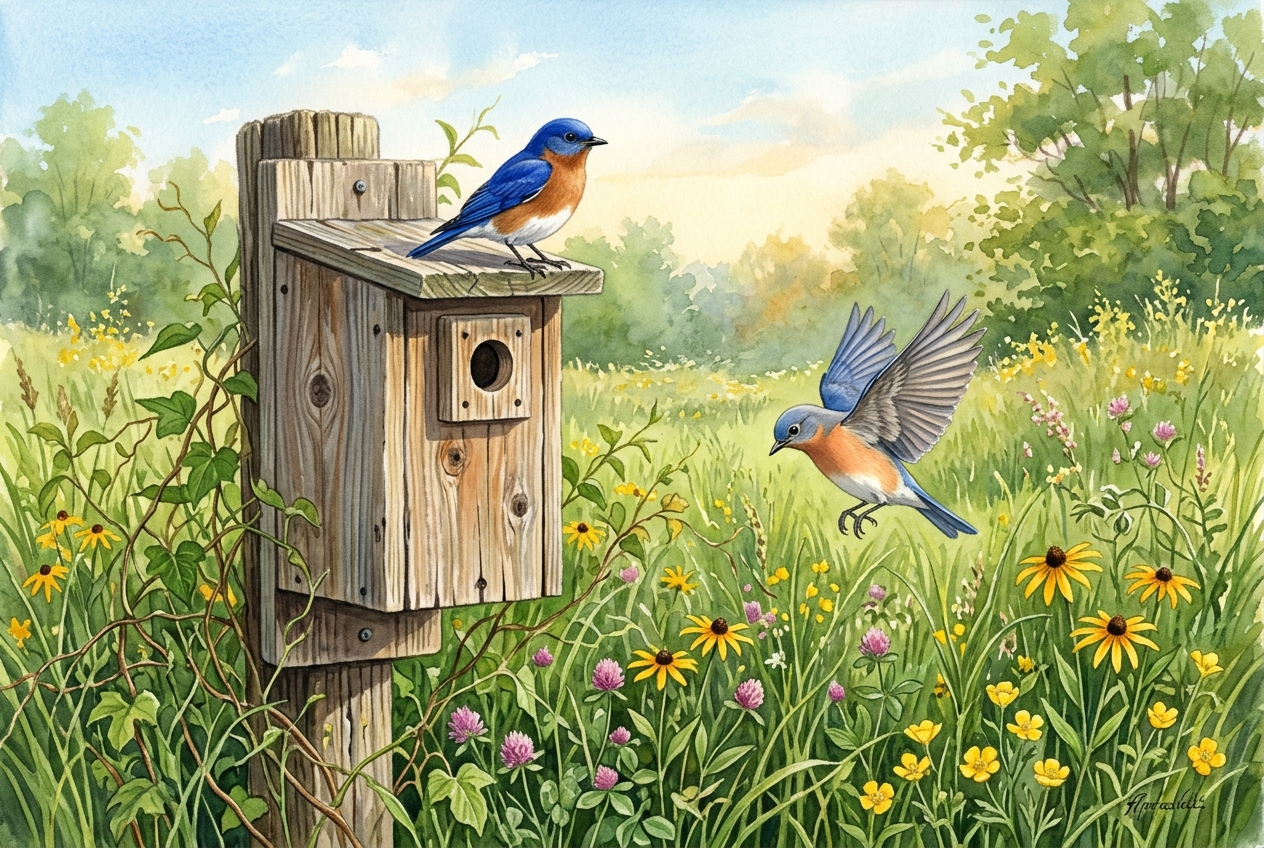
An illustration of two Bluebirds in a spring meadow. One of them is perched on a nesting box.

If a crew of speckled teenage bluebirds has claimed your yard this autumn, you have a golden opportunity. Bluebirds often turn their winter feeding grounds straight into their spring breeding territory.

By securing three simple essentials—the right winter fuel, dependable fresh water, and safe shelter—you can keep them around through the cold months and set up your yard for a fresh batch of younglings next spring.

Food: Fuel for Soft Bills

Bluebirds are thrushes, not seed-crackers. Their slender beaks are designed for catching insects and picking berries, so standard seed mixes won’t keep them around.

  • Mealworms (Live or Dried): The ultimate bluebird magnet. They provide the dense protein and fat young birds need to complete their first molt and endure frosty nights. Offer them in a smooth-sided dish or shallow open tray.
  • Suet Nuggets & Pellets: Bite-sized insect- or berry-flavored suet pellets give young birds instant calories without heavy digestive effort.
  • Sunflower Hearts & Chips: Shelled sunflower chips deliver high-energy plant fats without requiring birds to crack tough outer hulls.
  • What to Skip: Avoid whole peanuts (a choking hazard for juveniles), bread, milo, and cracked corn.

Water: The Year-Round Magnet

A dependable water source is often an even bigger draw for bluebirds than a feeder. Clean feathers are essential for fluffing and trapping warm body air during cold snaps.

  • Keep It Shallow: Bluebirds prefer water between 1 and 2 inches deep. Add a few flat, submerged stones so juveniles have a stable footing.
  • Prevent Freezing: In freezing weather, use a bird bath de-icer or a dark stone that absorbs midday sunlight. Keeping unfrozen water available when natural puddles are locked in ice makes your yard an indispensable daily stop.

Shelter: Winter Roosts Become Spring Nurseries

Winter shelter is the direct bridge to next spring’s broods. Bluebirds begin scouting nesting territory as early as late winter.

  • Clean Out Nest Boxes Now: Clear away old summer nesting material to remove parasites and leave a clean, dry interior.
  • Provide Thermal Roosting: On bitter winter nights, sibling trios and family groups will cram into a single clean nest box to share body heat.
  • Native Cover: Evergreens and fruiting shrubs (like dogwood, cedar, and winterberry) provide vital windbreaks and emergency winter food.
  • The Spring Payoff: Birds that spend the winter roosting safely on your property are far more likely to claim those same boxes as their official nesting territory once spring arrives.

The Assembly Line Graduates

No Comments

Back in June, I wrote about The Summer Assembly Line—that non-stop tag-team effort where our resident Eastern Bluebird parents worked overtime to churn out multiple broods before autumn arrived.

Four months later, the results of all that summer hustle are officially splashing around my backyard.

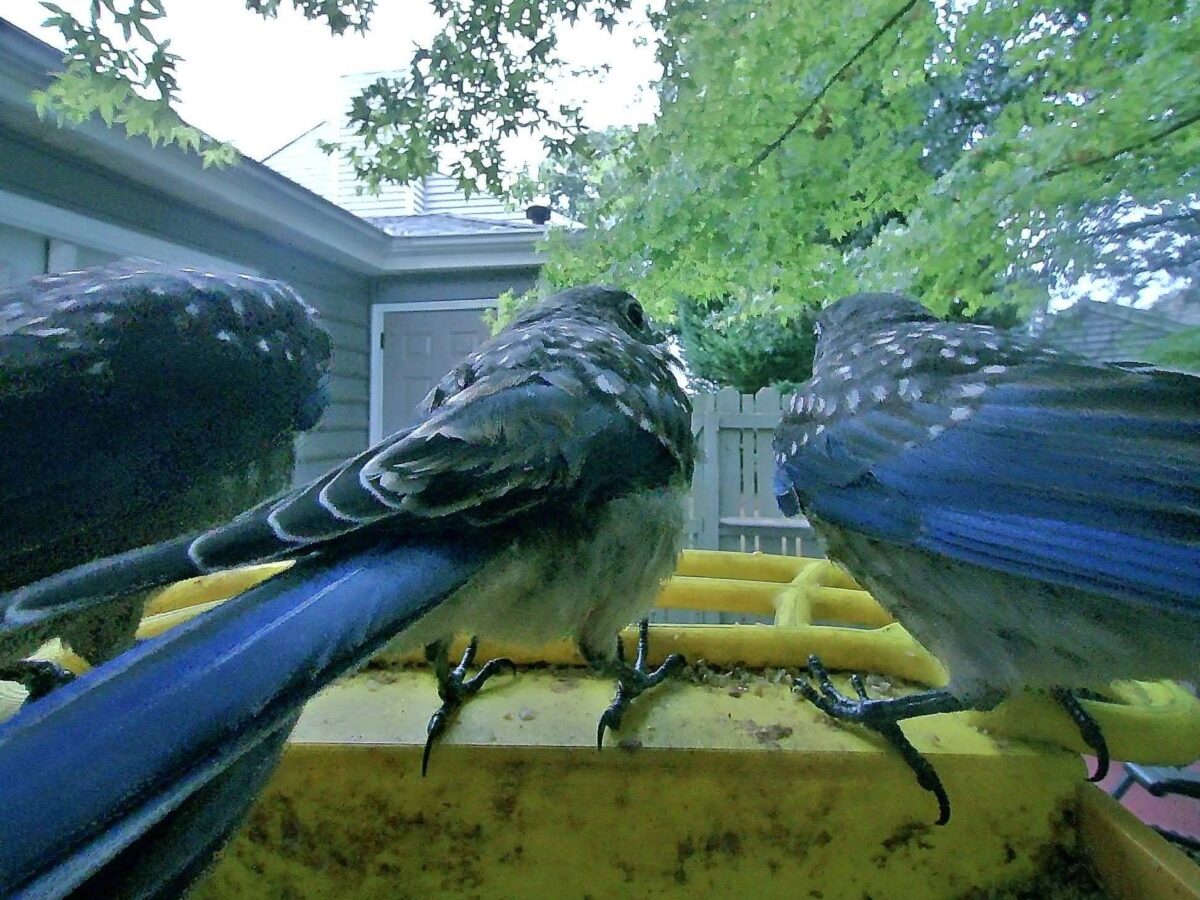
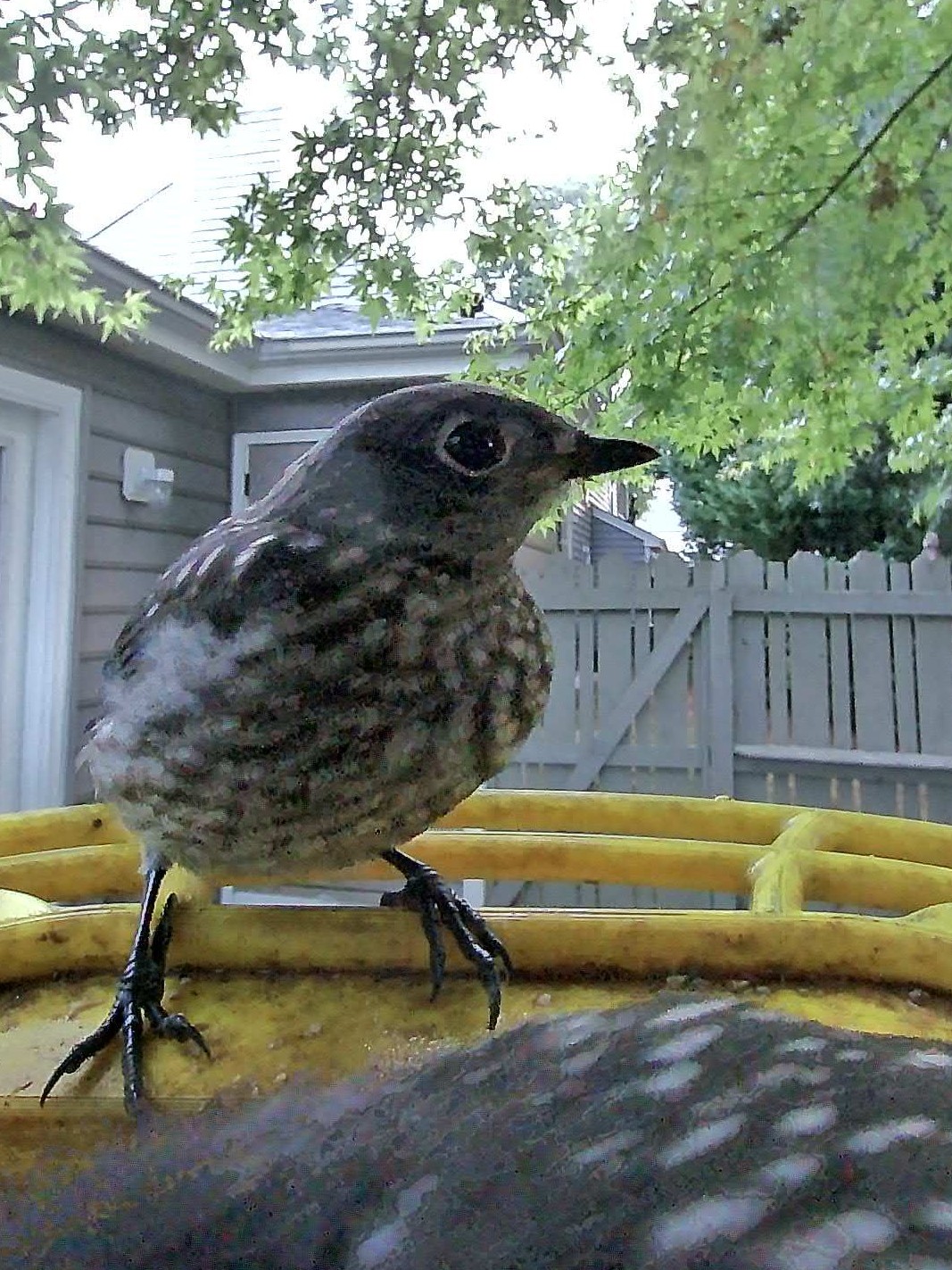
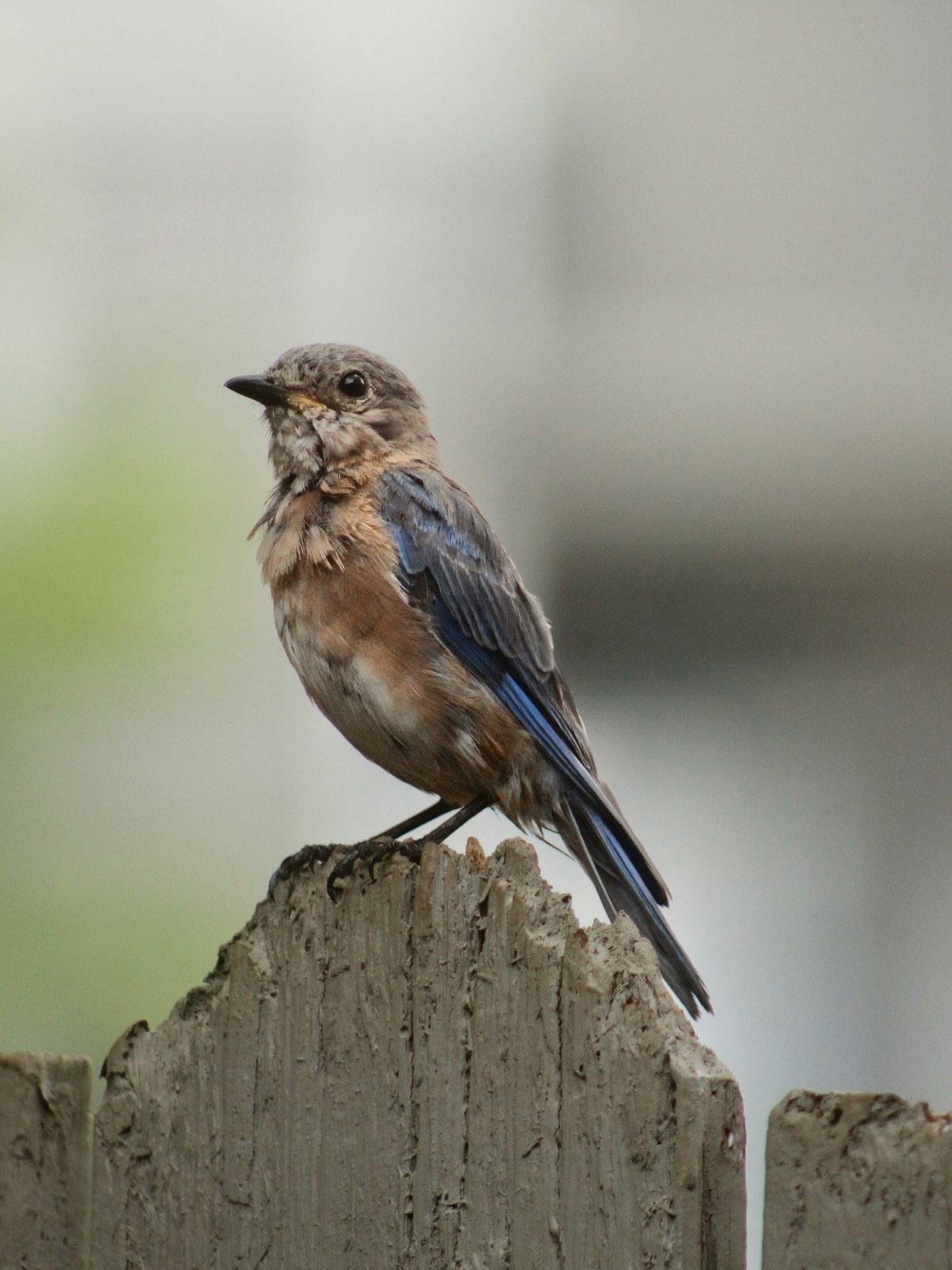
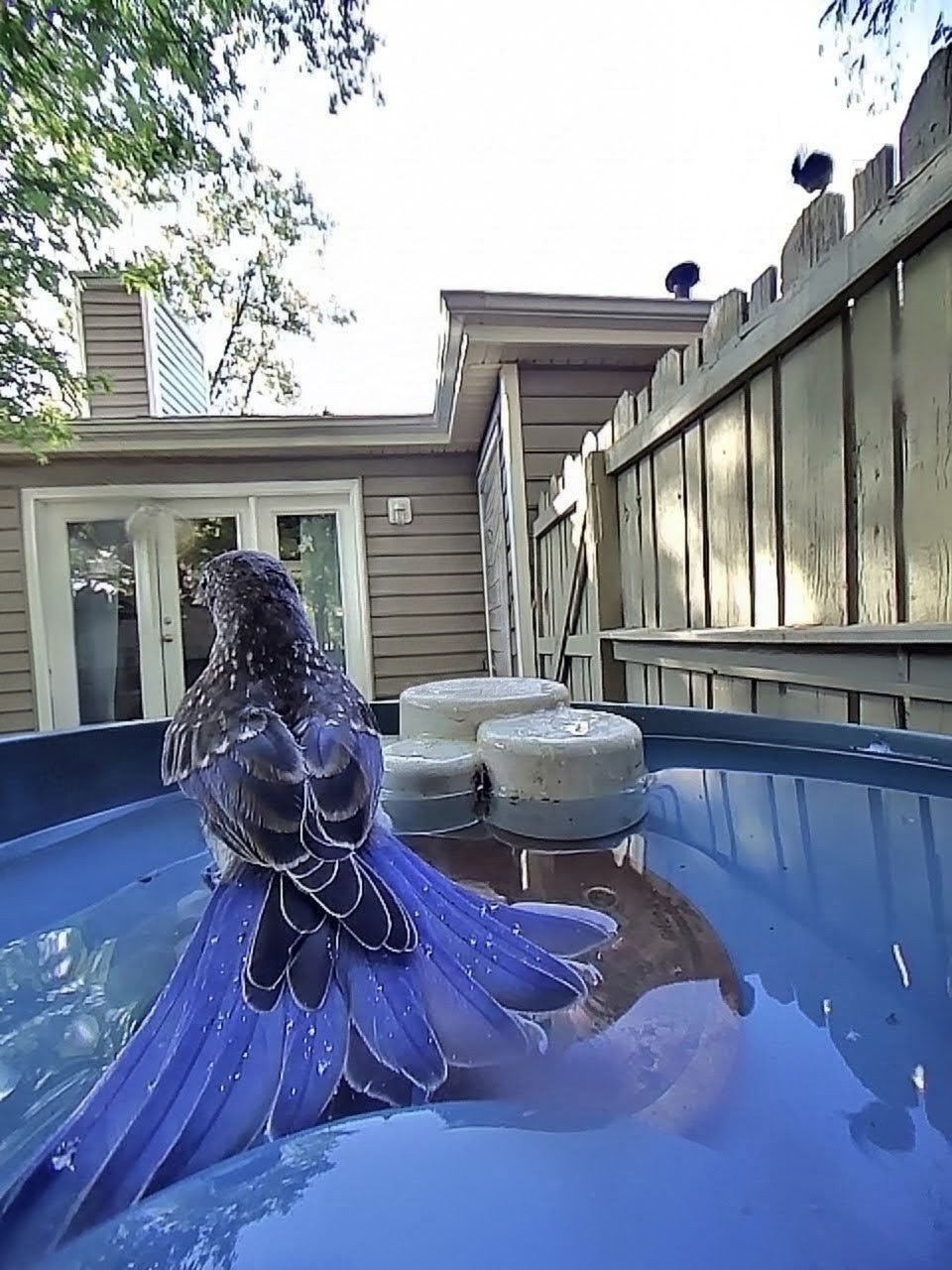
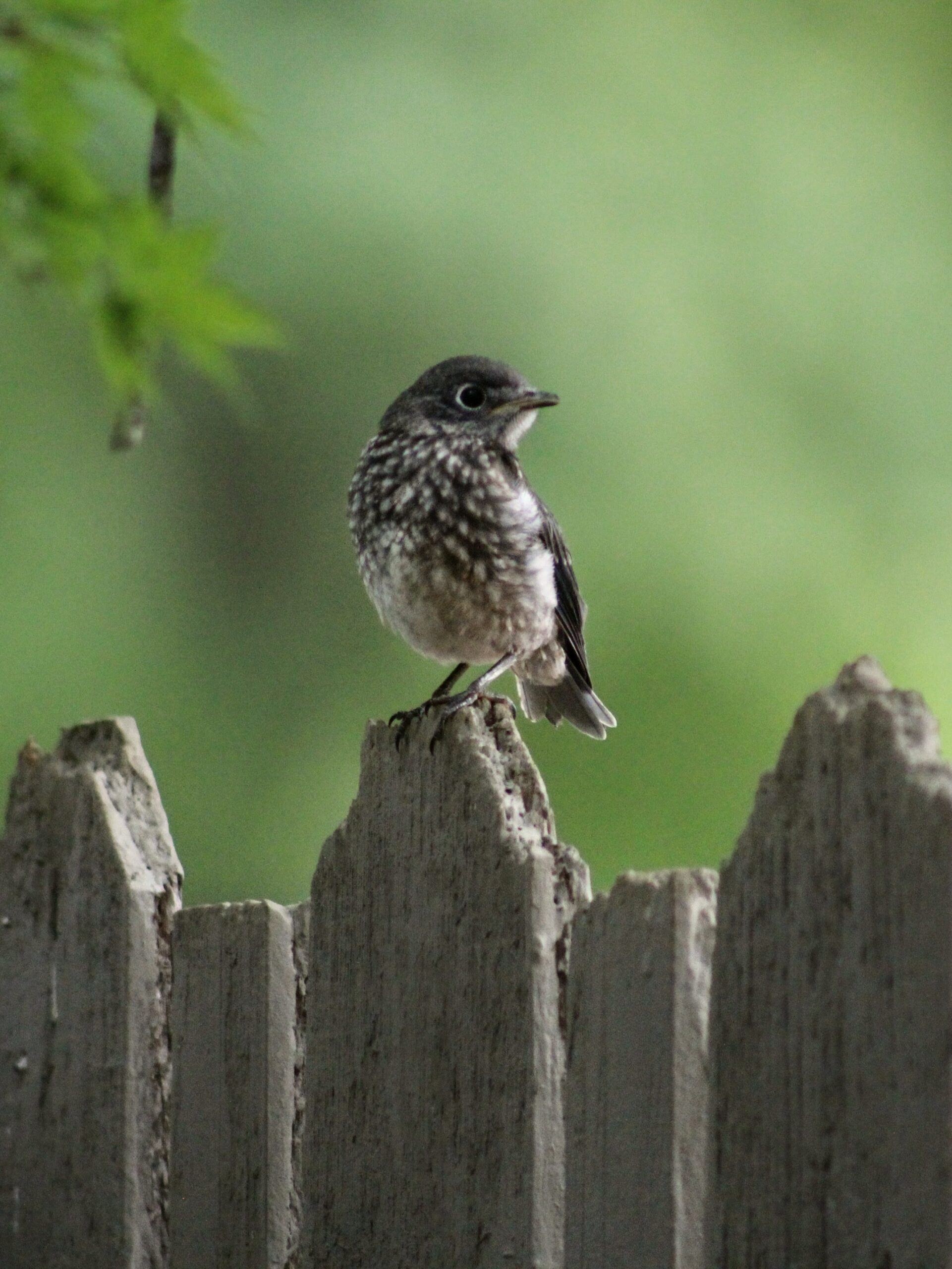
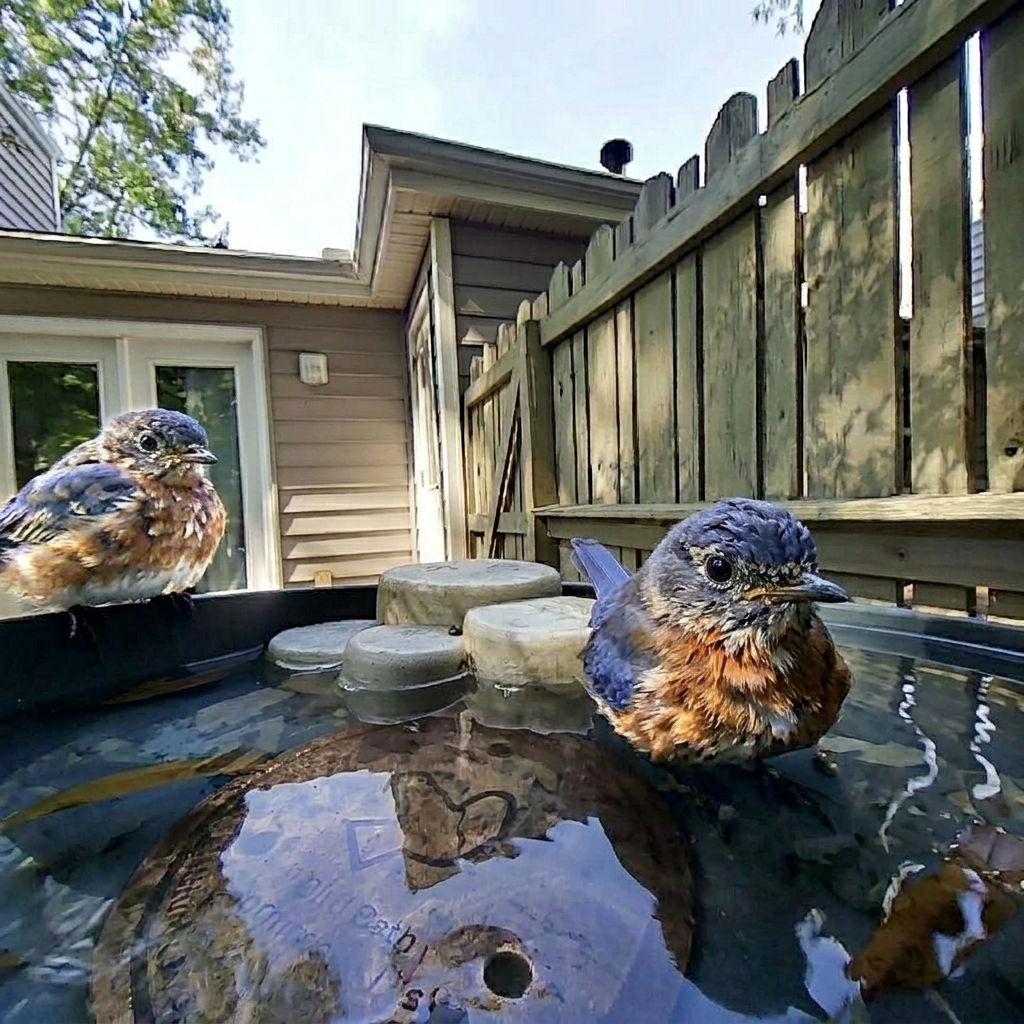
Throughout October, a small crew of juvenile bluebirds has become daily regulars at the bird bath. While the frenzied feeding routines have finally wound down for the parents, these youngsters are still sporting their awkward transitional look: scruffy, speckled chests and soft grayish-brown coats, with just the first hints of rich blue breaking through along their wings and tail feathers as they molt into their winter plumage.

Seeing them take over the water feature is the ultimate payoff. Eastern Bluebird family units often stay loosely banded together into the fall, and with cooler, drier autumn days settling in, a clean bird bath becomes the neighborhood hub.

Watching these speckled teenagers jostle for position on the rim and enthusiastically splash through the cool morning water is proof that the summer assembly line was a complete success.

Bluebird TV

No Comments

This bluebird family has completely stolen the show in the backyard this week! Every morning starts with a vibrant flash of blue along the fence line, where the parents keep a watchful eye while the fledglings test their wings.

Between taking turns making a splash in the bird bath and lining up at the feeder for a mealworm snack, their daily routine has turned into the best entertainment around. Watching them flutter from post to perch, chattering away, never gets old. It’s hard to beat a front-row seat to this lively little crew—pure backyard magic.

The Summer Assembly Line

No Comments

Do Eastern Bluebirds Have Multiple Broods?

If you’ve ever watched a pair of Eastern Bluebirds frantically hunting in your backyard, you know just how hard bird parents work. Back in April, I was lucky enough to witness the payoff: a pair of resident Eastern Bluebirds successfully raised their first brood, and I caught the rewarding sight of a brand-new fledgling on my fence.

But now that June is here, it raises a fascinating question: are they done for the summer?
Not even close! Raising multiple broods in a single season is actually a core part of the Eastern Bluebird’s summer survival strategy. While two broods are standard across most of their range, it is incredibly common for these birds—especially here in the warmer southern regions—to successfully raise three distinct broods before autumn arrives.
It takes roughly five to six weeks to go from egg-laying to fledging. Because this pair got such an early start in April, they are perfectly on track to wrap up round two right about now, with a potential third batch running through July and August.
Managing a continuous assembly line of hungry chicks requires serious teamwork. While the female incubates the next clutch of eggs, the male takes over full-time dad duty, teaching the speckled teenagers from the first round how to hunt.
So, if you notice a sudden spike in traffic at the mealworm feeder, or spot a bright blue dad feeding a scruffy, spotted juvenile while mom sneaks back to the nest, you’re witnessing the ultimate backyard tag-team effort. Keep your eyes on the skies—and the fence lines—for round two!

Juvenile Bluebird

No Comments

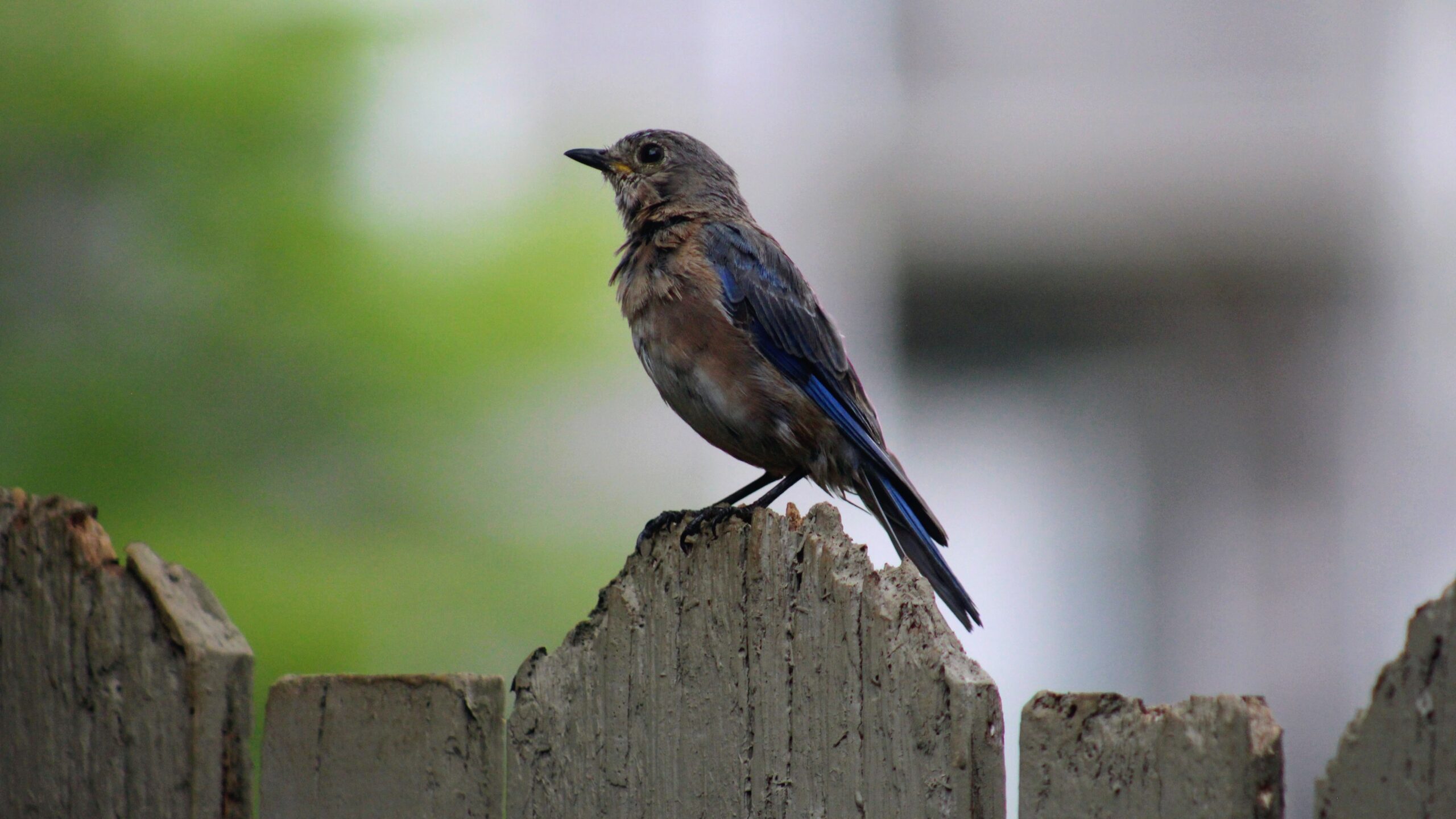
Look at this adorable little juvenile Eastern Bluebird I spotted today! It’s so neat to see their speckled feathers before they get their vibrant adult blue. What a treat! 🐦

Canon EOS Rebel T6
f/5.6 * 1/1000 * 300 mm * ISO3200

Waiting for Papa

No Comments

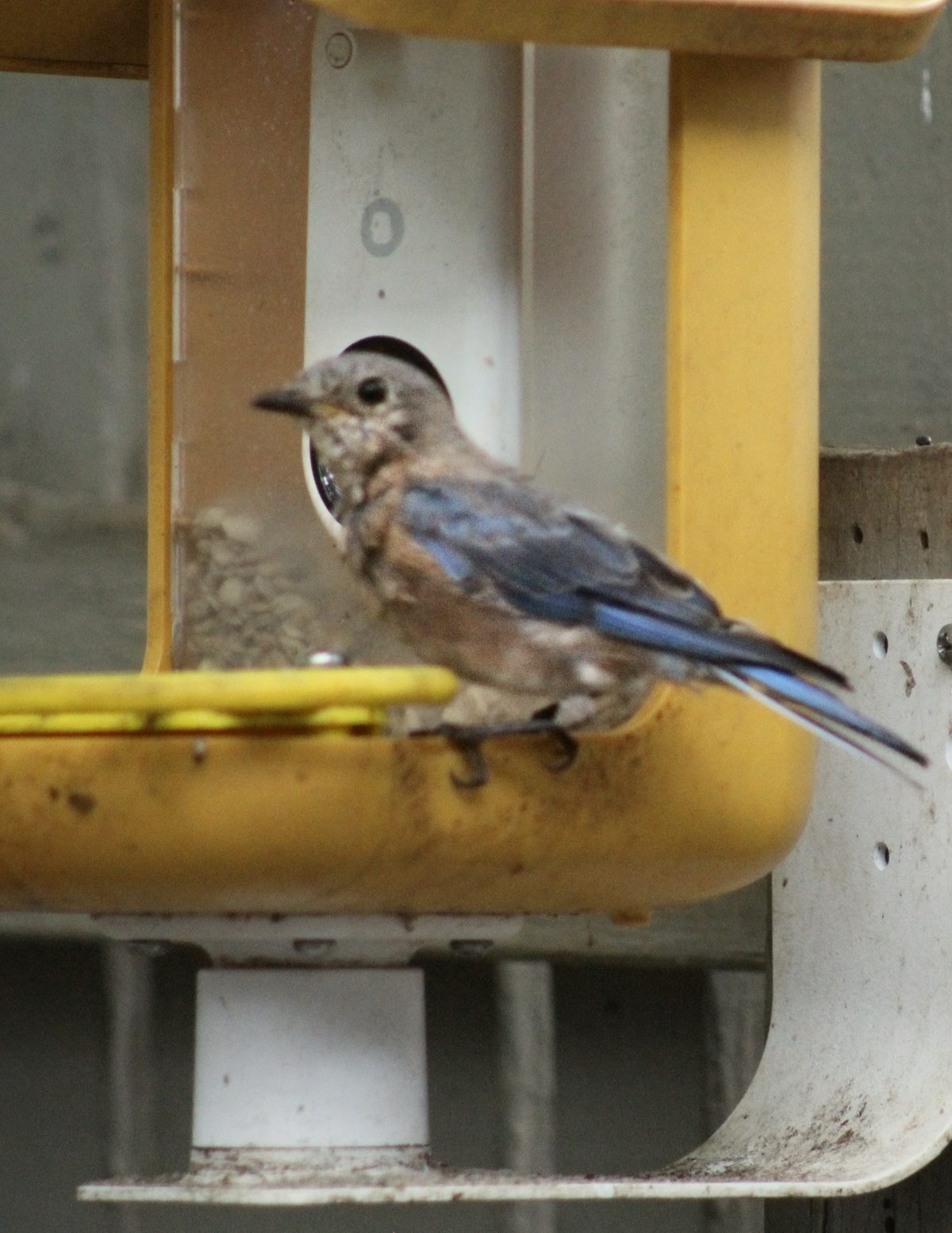
This mama Bluebird and a juvenile were waiting for Papa to come back from the feeder with some food. Probably hoping for some mealworms from my tray feeder. (I couldn’t get a photo of him.)

Canon EOS Rebel T6
f/5.6 * 1/1000 * 300 mm * ISO3200

Spring Has Sprung

No Comments

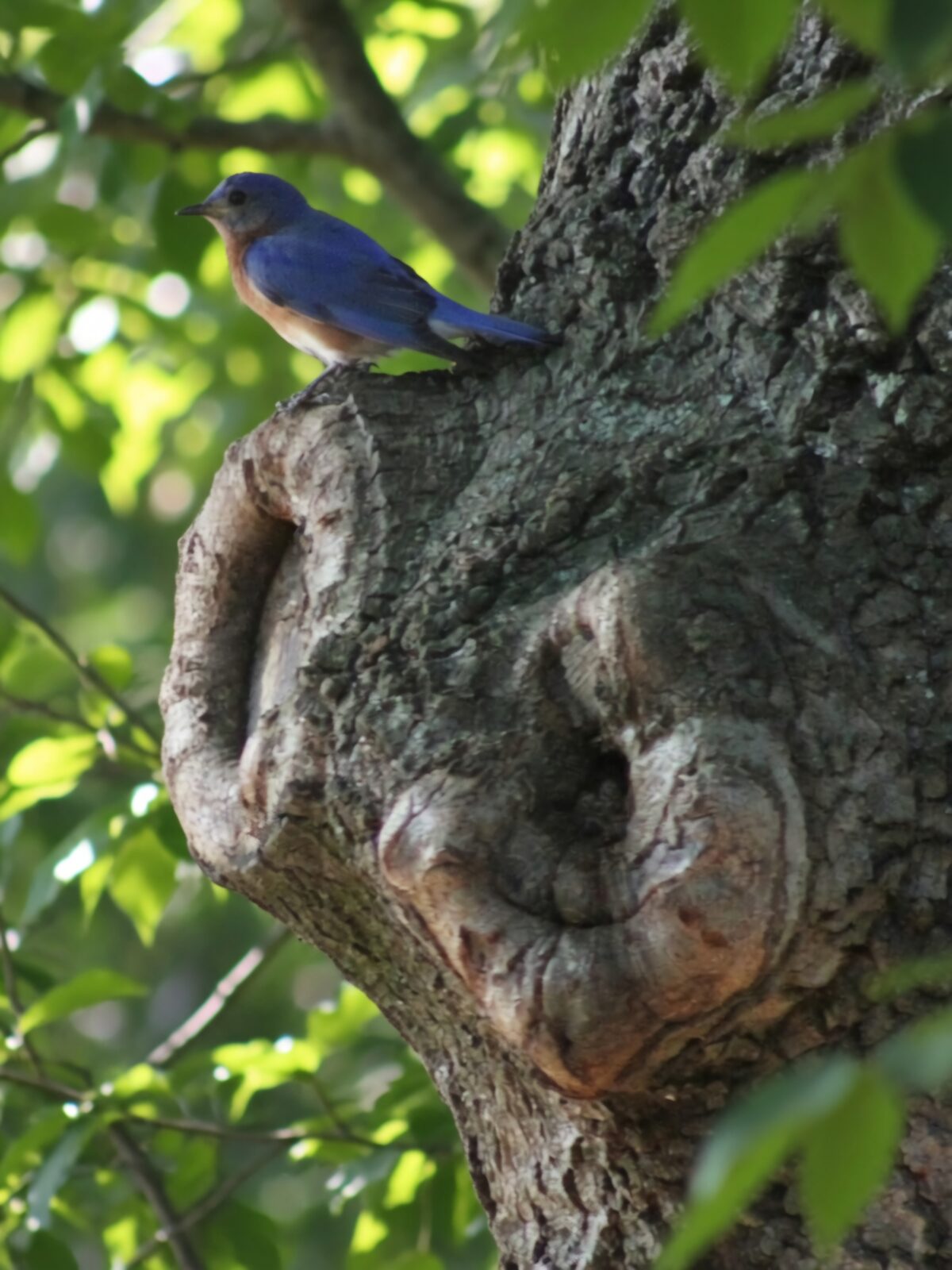
Spring has officially arrived, and this little bluebird is making sure I know it. There’s something so hopeful about seeing that flash of blue and orange for the first time after a long winter. He seems pretty curious about the camera—or maybe he’s just checking the snack situation! 🐦🌷

A splash of sky, a warm embrace,
He brings the joy of sunny days.
With russet breast and sapphire crown,
He signals winter’s upside-down.
A herald small with much to bring,
Our first, most welcome bird of spring.