How to Keep Teenage Bluebirds in Your Yard for Next Spring
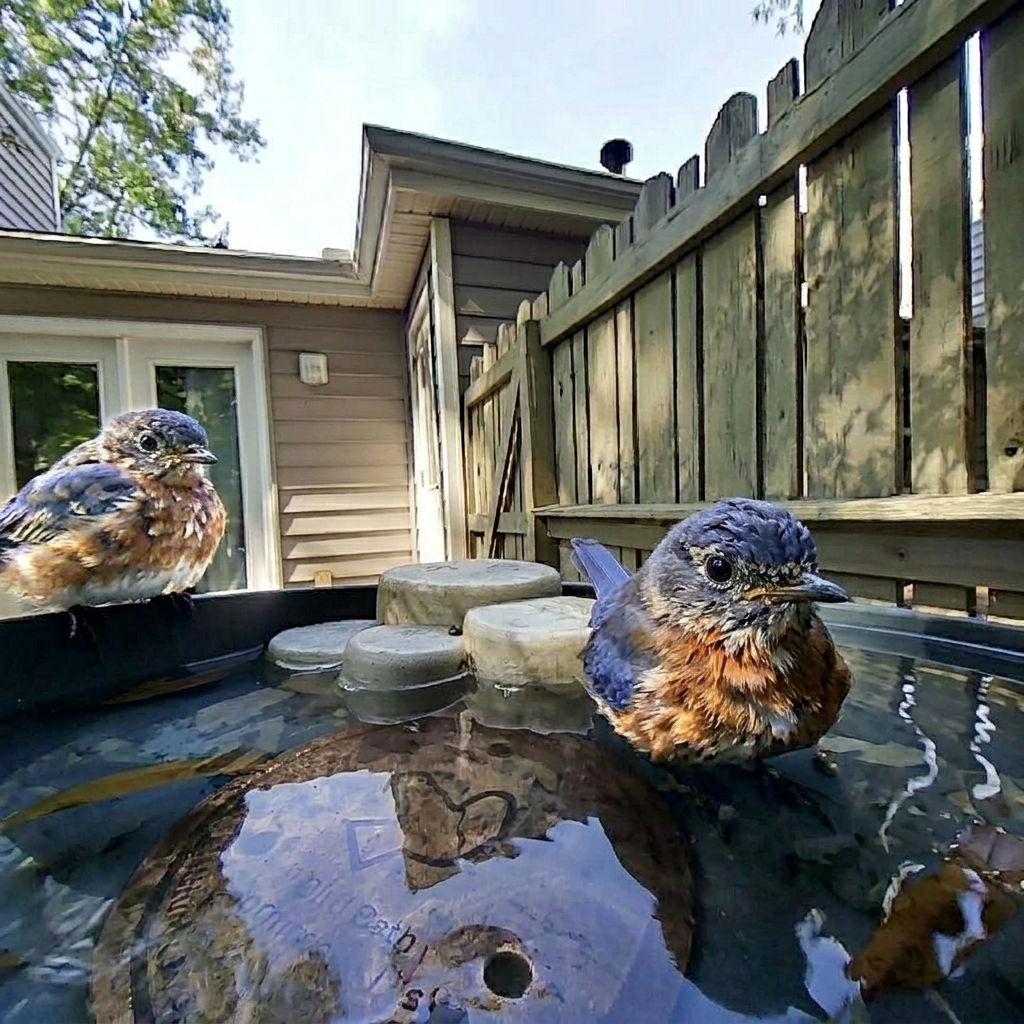
If a crew of speckled teenage bluebirds has claimed your yard this autumn, you have a golden opportunity. Bluebirds often turn their winter feeding grounds straight into their spring breeding territory.
By securing three simple essentials—the right winter fuel, dependable fresh water, and safe shelter—you can keep them around through the cold months and set up your yard for a fresh batch of younglings next spring.
Food: Fuel for Soft Bills
Bluebirds are thrushes, not seed-crackers. Their slender beaks are designed for catching insects and picking berries, so standard seed mixes won’t keep them around.
- Mealworms (Live or Dried): The ultimate bluebird magnet. They provide the dense protein and fat young birds need to complete their first molt and endure frosty nights. Offer them in a smooth-sided dish or shallow open tray.
- Suet Nuggets & Pellets: Bite-sized insect- or berry-flavored suet pellets give young birds instant calories without heavy digestive effort.
- Sunflower Hearts & Chips: Shelled sunflower chips deliver high-energy plant fats without requiring birds to crack tough outer hulls.
- What to Skip: Avoid whole peanuts (a choking hazard for juveniles), bread, milo, and cracked corn.
Water: The Year-Round Magnet
A dependable water source is often an even bigger draw for bluebirds than a feeder. Clean feathers are essential for fluffing and trapping warm body air during cold snaps.
- Keep It Shallow: Bluebirds prefer water between 1 and 2 inches deep. Add a few flat, submerged stones so juveniles have a stable footing.
- Prevent Freezing: In freezing weather, use a bird bath de-icer or a dark stone that absorbs midday sunlight. Keeping unfrozen water available when natural puddles are locked in ice makes your yard an indispensable daily stop.
Shelter: Winter Roosts Become Spring Nurseries
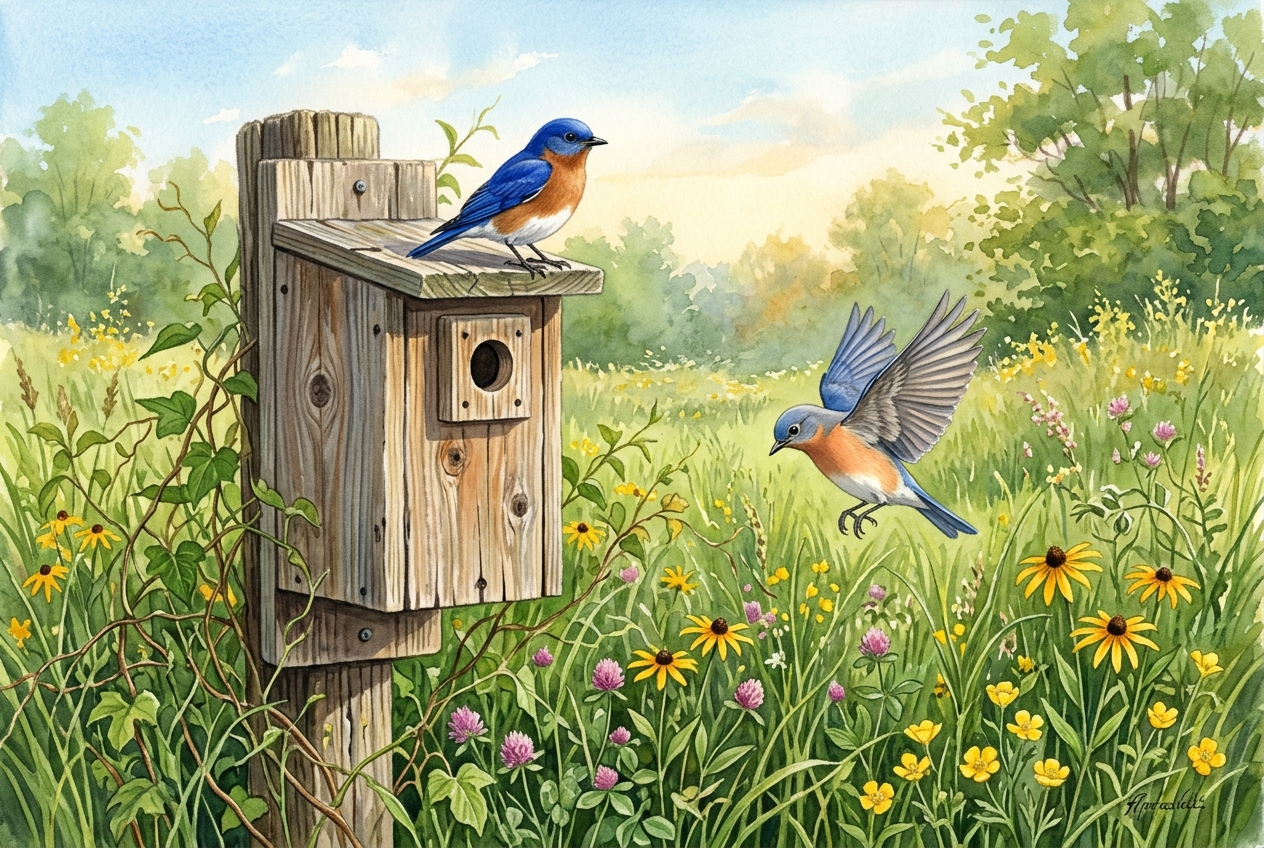
Winter shelter is the direct bridge to next spring’s broods. Bluebirds begin scouting nesting territory as early as late winter.
- Clean Out Nest Boxes Now: Clear away old summer nesting material to remove parasites and leave a clean, dry interior.
- Provide Thermal Roosting: On bitter winter nights, sibling trios and family groups will cram into a single clean nest box to share body heat.
- Native Cover: Evergreens and fruiting shrubs (like dogwood, cedar, and winterberry) provide vital windbreaks and emergency winter food.
- The Spring Payoff: Birds that spend the winter roosting safely on your property are far more likely to claim those same boxes as their official nesting territory once spring arrives.