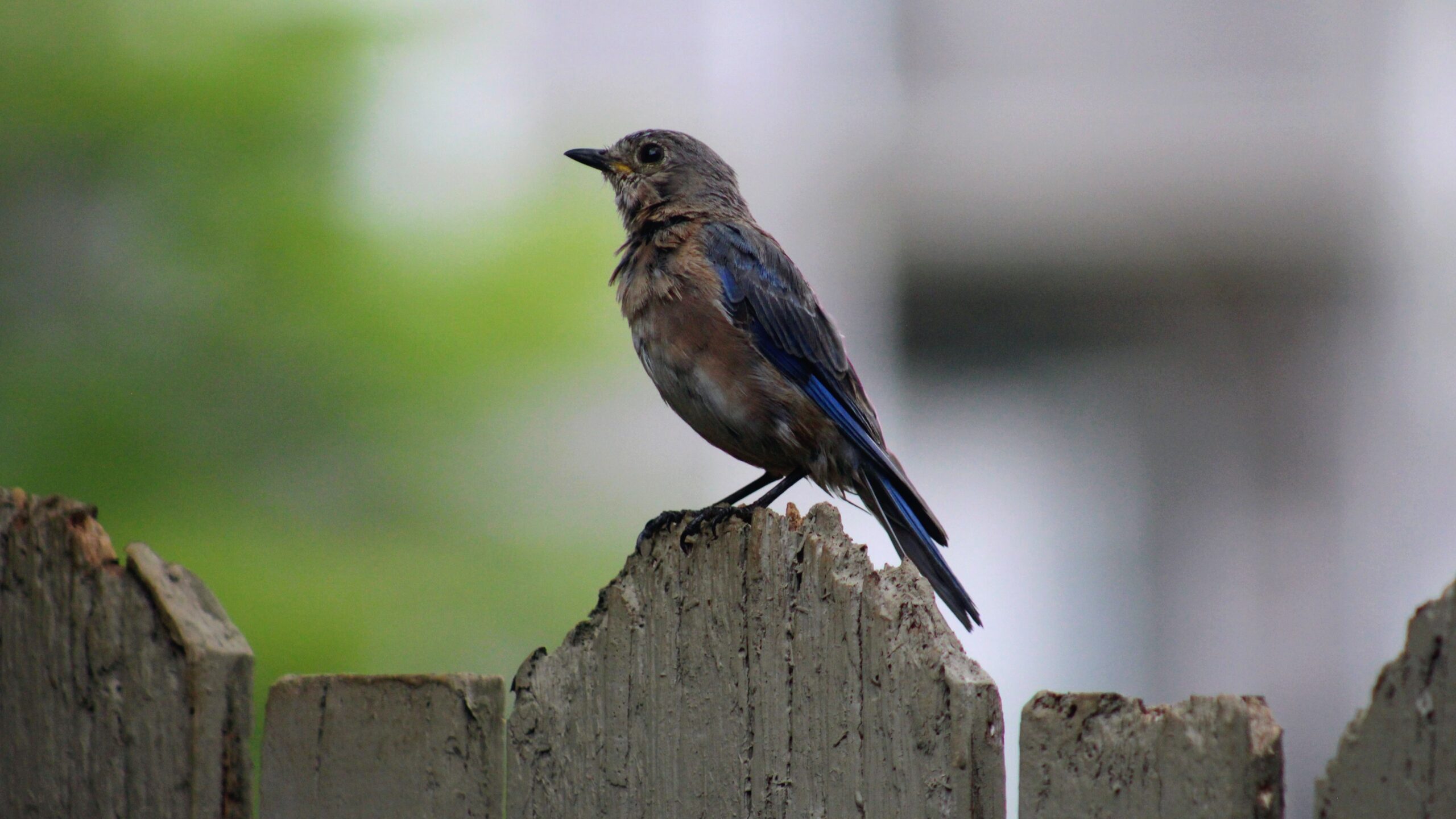
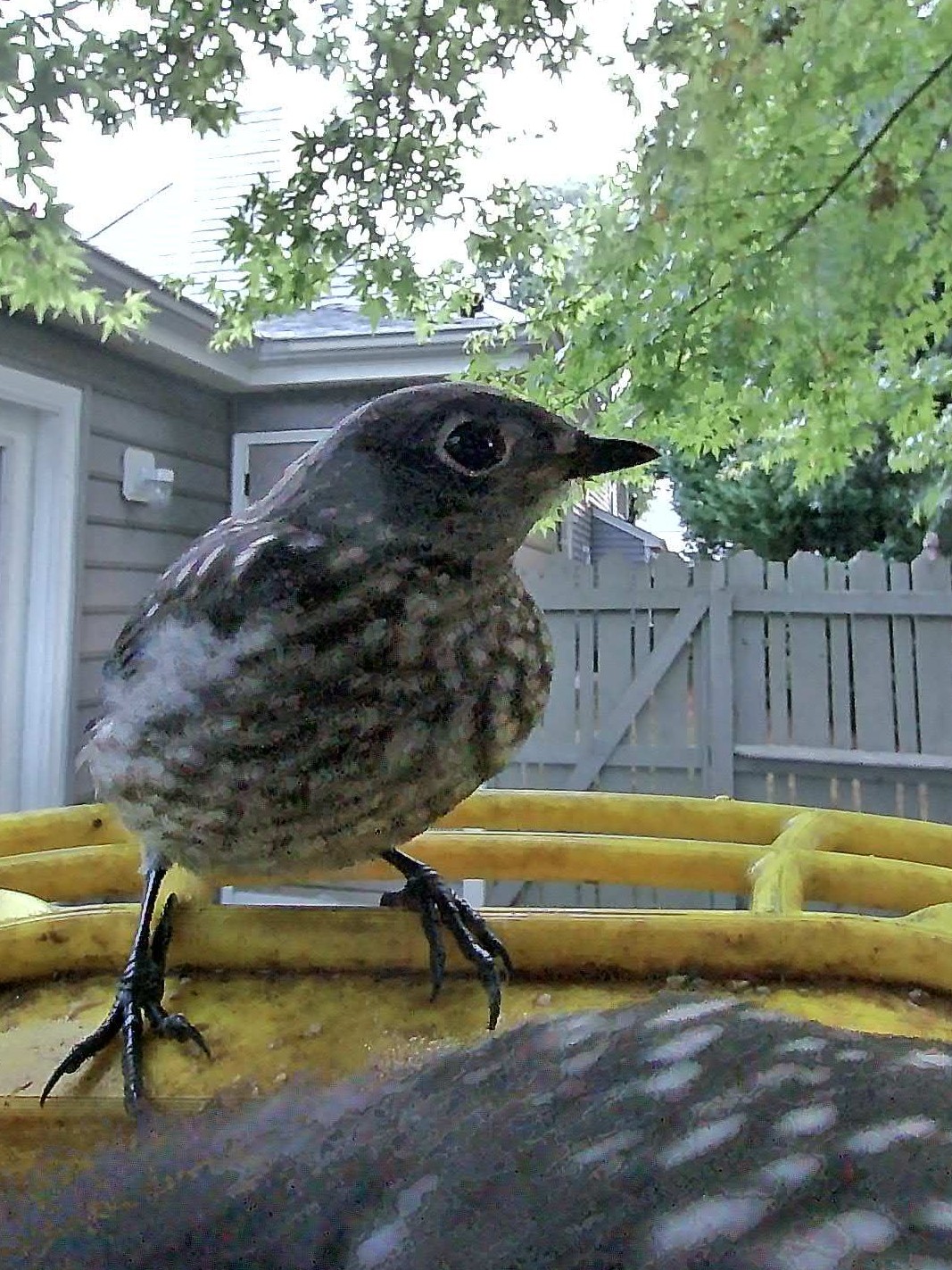
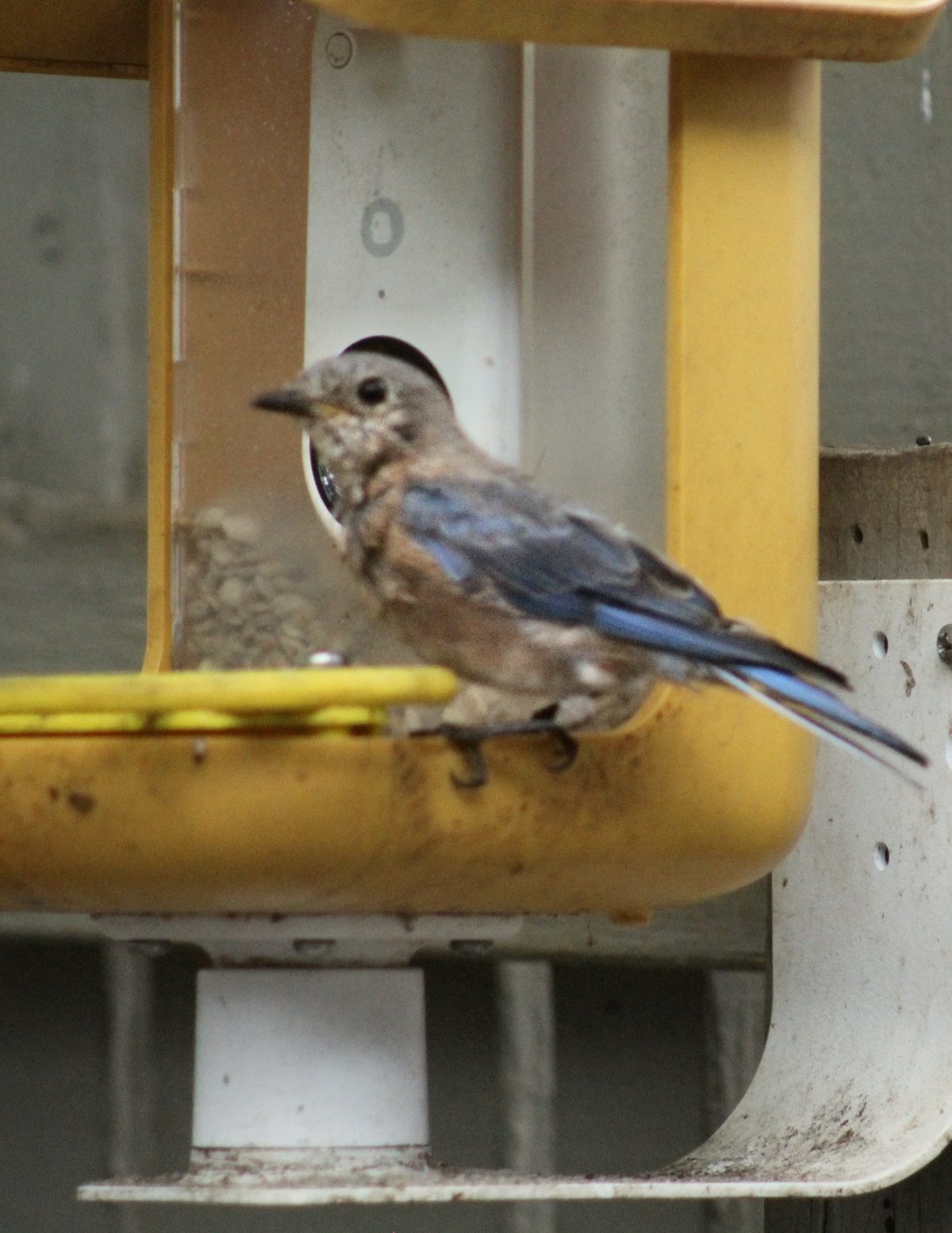
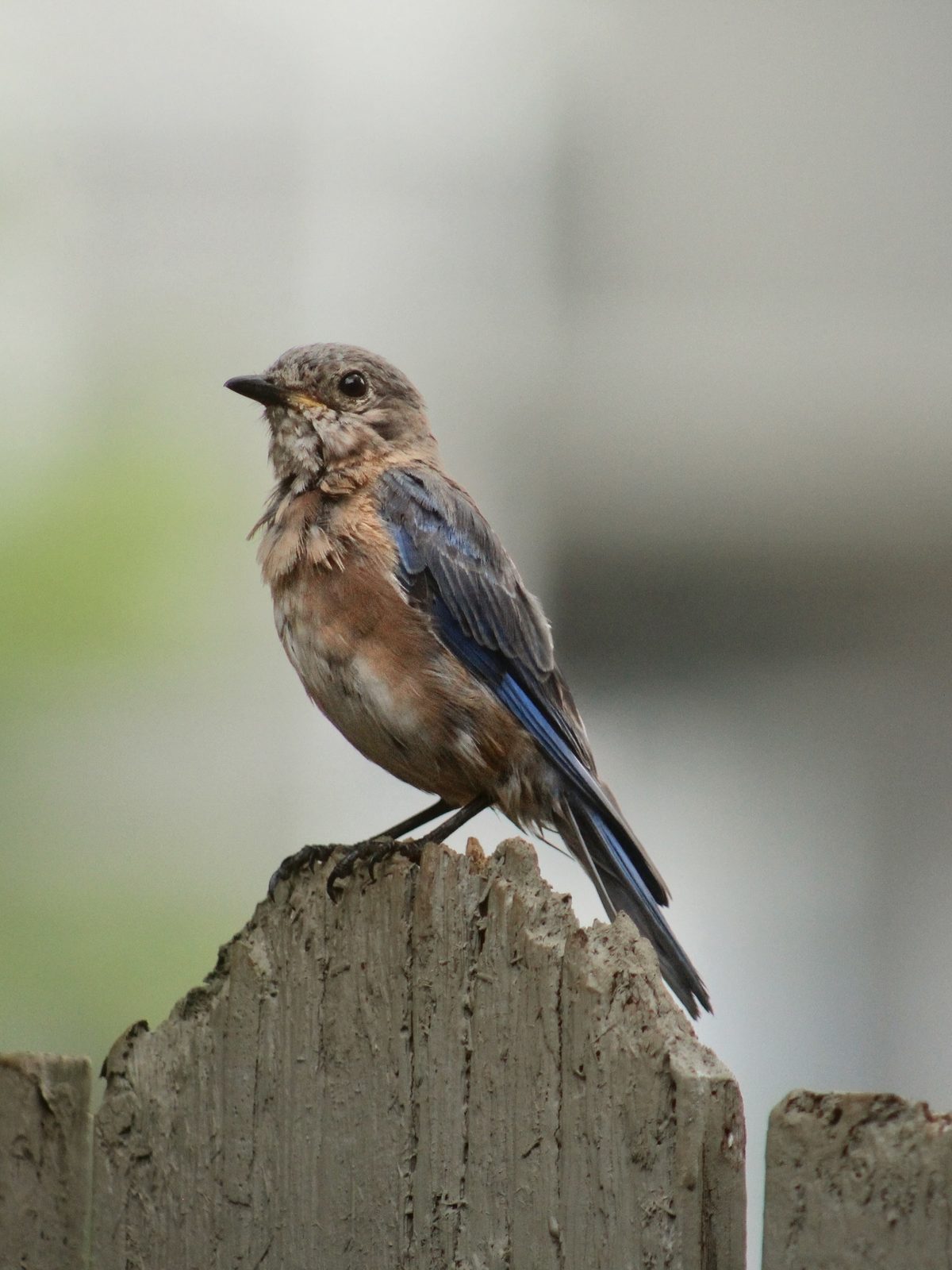
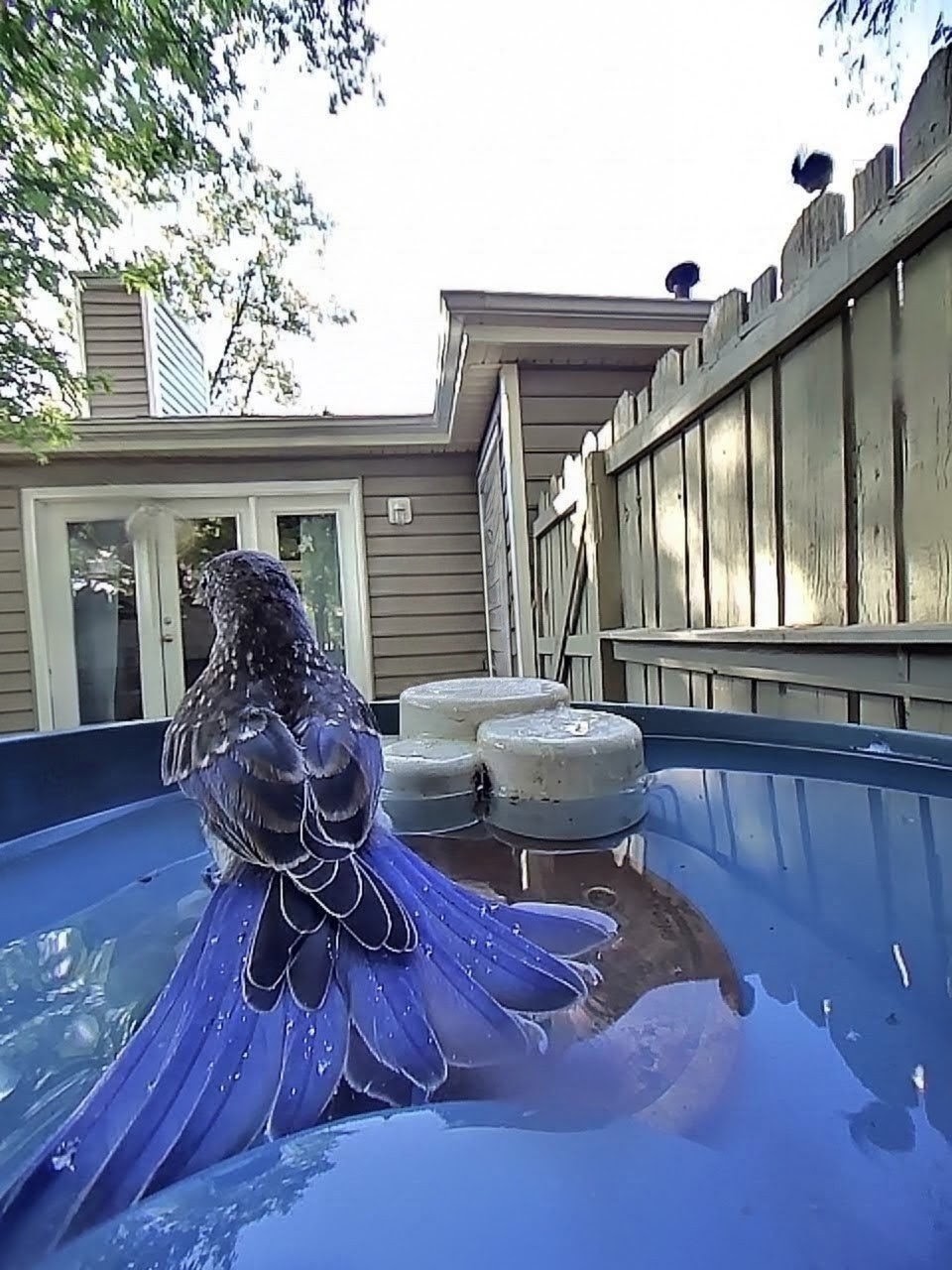
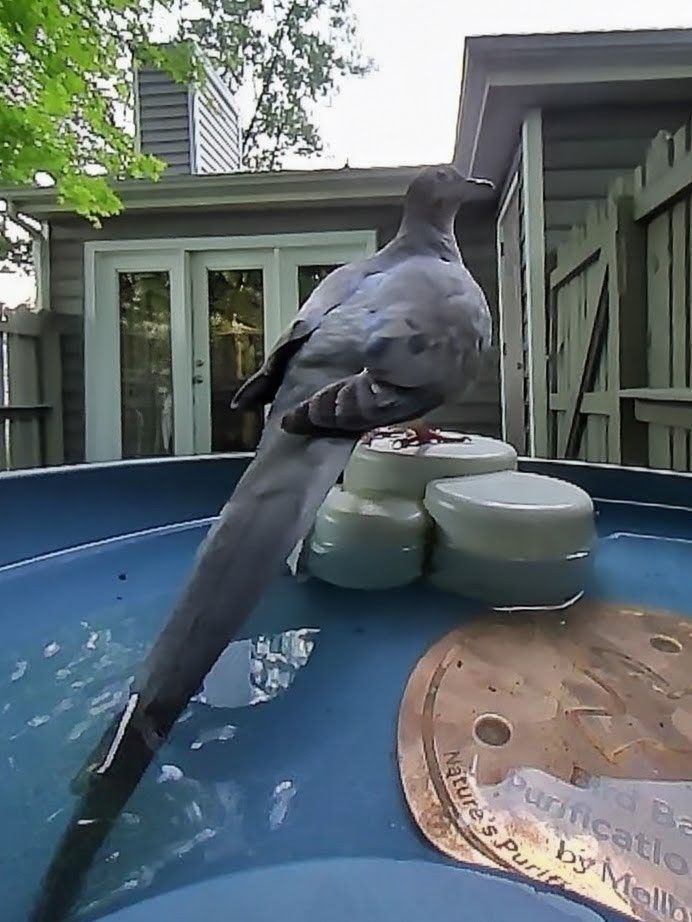
This bluebird family has completely stolen the show in the backyard this week! Every morning starts with a vibrant flash of blue along the fence line, where the parents keep a watchful eye while the fledglings test their wings.
Between taking turns making a splash in the bird bath and lining up at the feeder for a mealworm snack, their daily routine has turned into the best entertainment around. Watching them flutter from post to perch, chattering away, never gets old. It’s hard to beat a front-row seat to this lively little crew—pure backyard magic.
Oh, poor Bruce! Molting can definitely be a bit of a rough patch. Hang in there, little guy, your new feathers will be stunning! Wishing Bruce a smooth molting process.
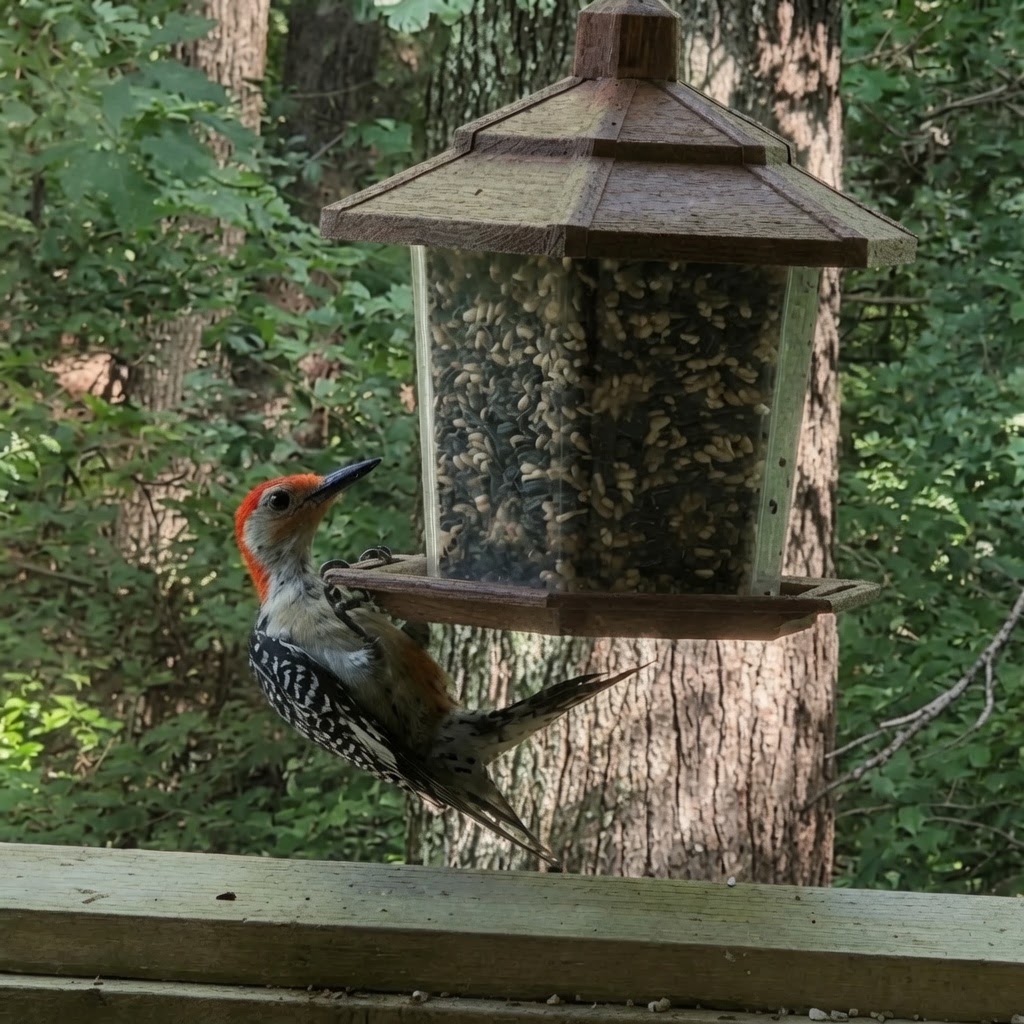
Look at this little Red-bellied Woodpecker just hanging around for a snack! Despite their name, the red on their belly is often quite faint, with the prominent red cap being their most striking feature.
If you’ve ever spent time near the waters of the Carolinas, you know the local waterbirds are the undisputed masters of drama. Whether they’re diving after a fish or spreading their wings to dry in the sun, they always command the scene.
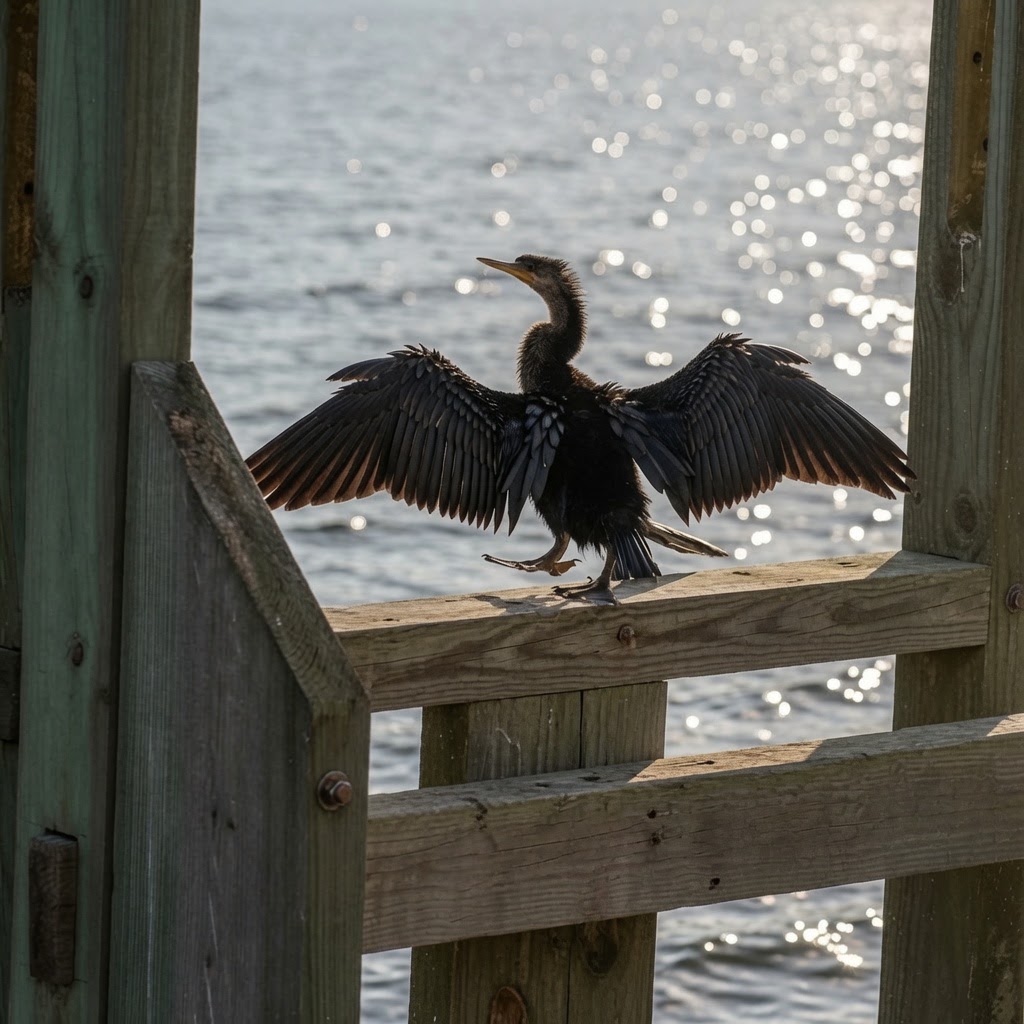
I initially called this guy a Cormorant—he was, after all, holding that iconic wing-drying stance high on a marker, looking ready to drop a Daniel-san Crane Kick at any second. But after running the photo past Merlin (and Grok), the verdict came back: Anhinga.
Honestly? That makes the Karate Kid reference even more fitting.
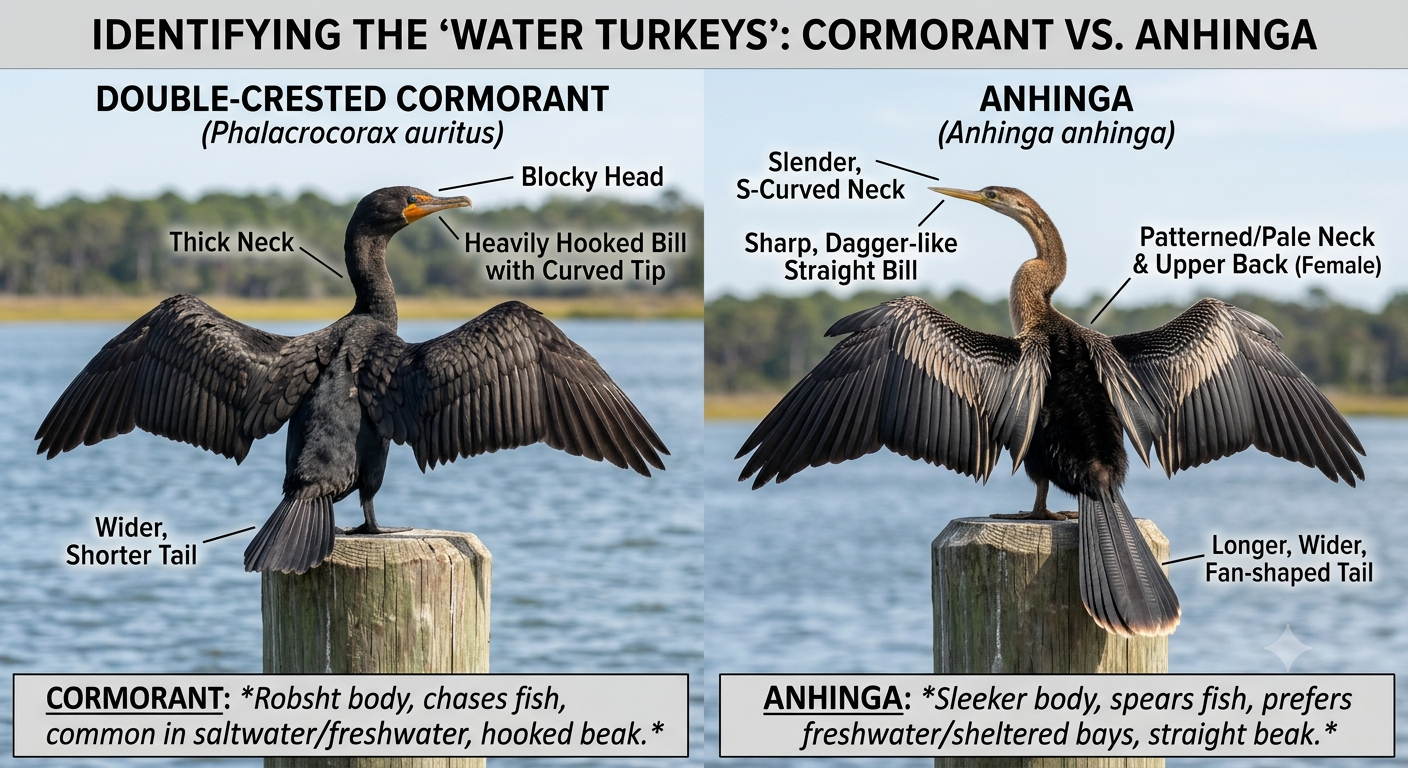
Anhinga vs. Cormorant: The Classic Mix-Up
It’s ridiculously easy to confuse the two, especially when both species love hanging out in coastal Carolinas, perching on docks, pilings, and channel markers while striking the exact same wing-out pose.
Here is how to spot the difference when you’re out in the field:
The Plot Twist Shot
Catching this moment was all about timing. The way he locked his pose on that marker—sharp focus, perfect balance, and a dagger-like beak pointed straight ahead—he looked less like a casual sunbather and more like a bird about to compete in the All-Valley Karate Tournament.
Whether it’s a Double-crested Cormorant or a sneaky Anhinga keeping you on your toes, keep your eyes on the pilings next time you’re out by the water. You never know when you’ll spot a feathered martial artist perfecting their technique.
This Carolina Wren knows exactly how to handle a scorching summer day. There’s nothing quite like a refreshing splash in the bird bath to cool down those feathers. 💦
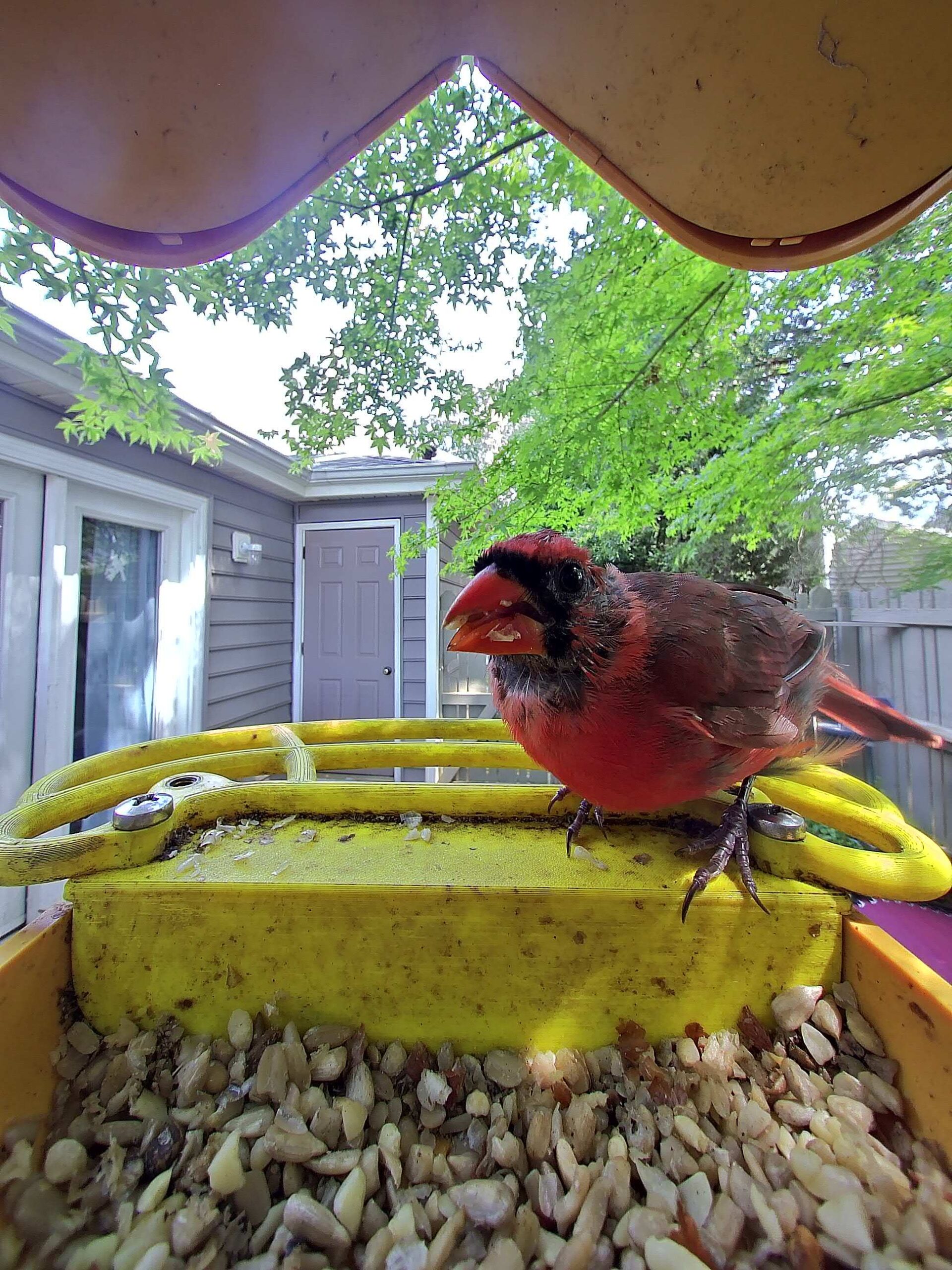
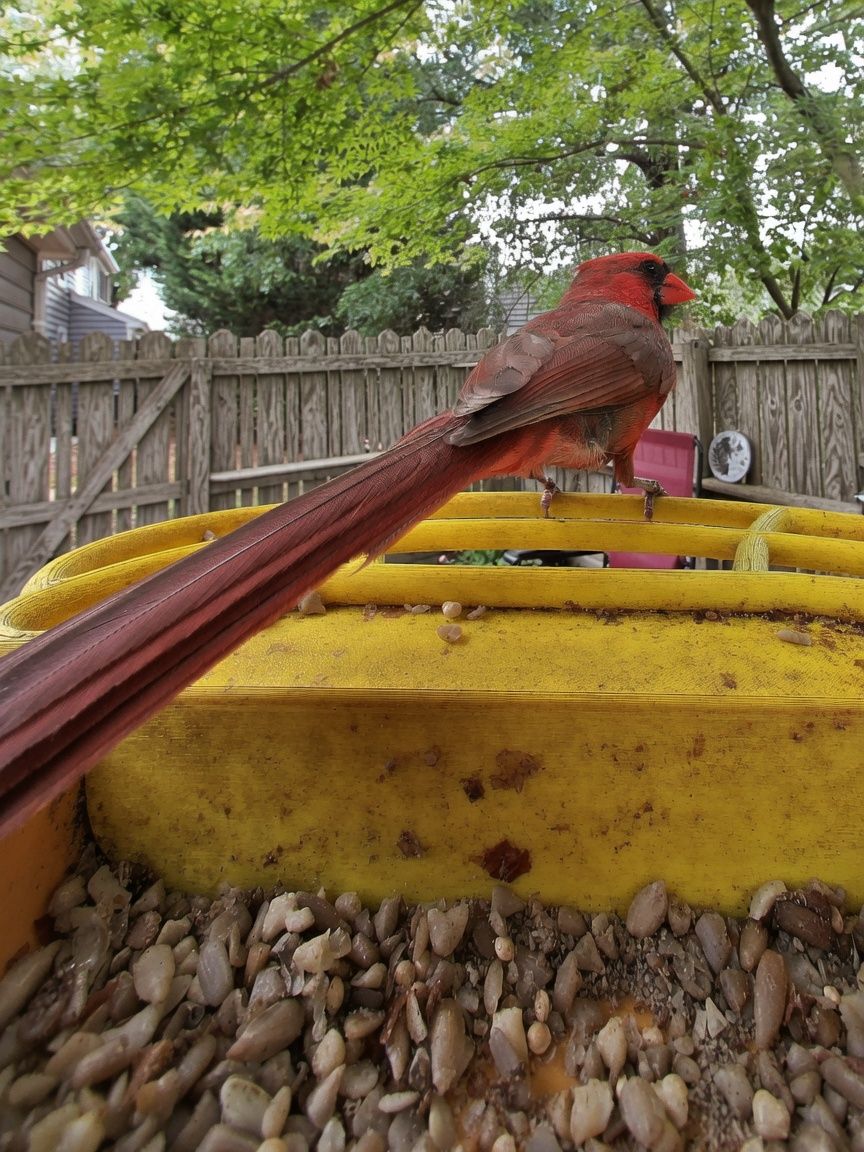
When the camera angle hits just right, your tail game goes infinite! This Northern Cardinal was owning the feeder today. Nature’s runway model in full effect!
Step right up and witness the grandest spectacle in the center ring! 🎪✨ Move over acrobats, there’s a new star under the big top. This featherweight flyer traded the backyard bird feeder for the main stage, showing off some absolutely flawless balance on a giant beach ball! Talk about an aerial act you won’t want to miss. 🦜🔴
Caught my backyard Carolina Wren mastering the Singing Cobra yoga pose ✨ Head back, beak wide open, channeling those morning vibes and belting out a full-throated ‘teakettle-teakettle!’ Who needs a studio when your feeder doubles as a yoga mat? Namaste, little legend.
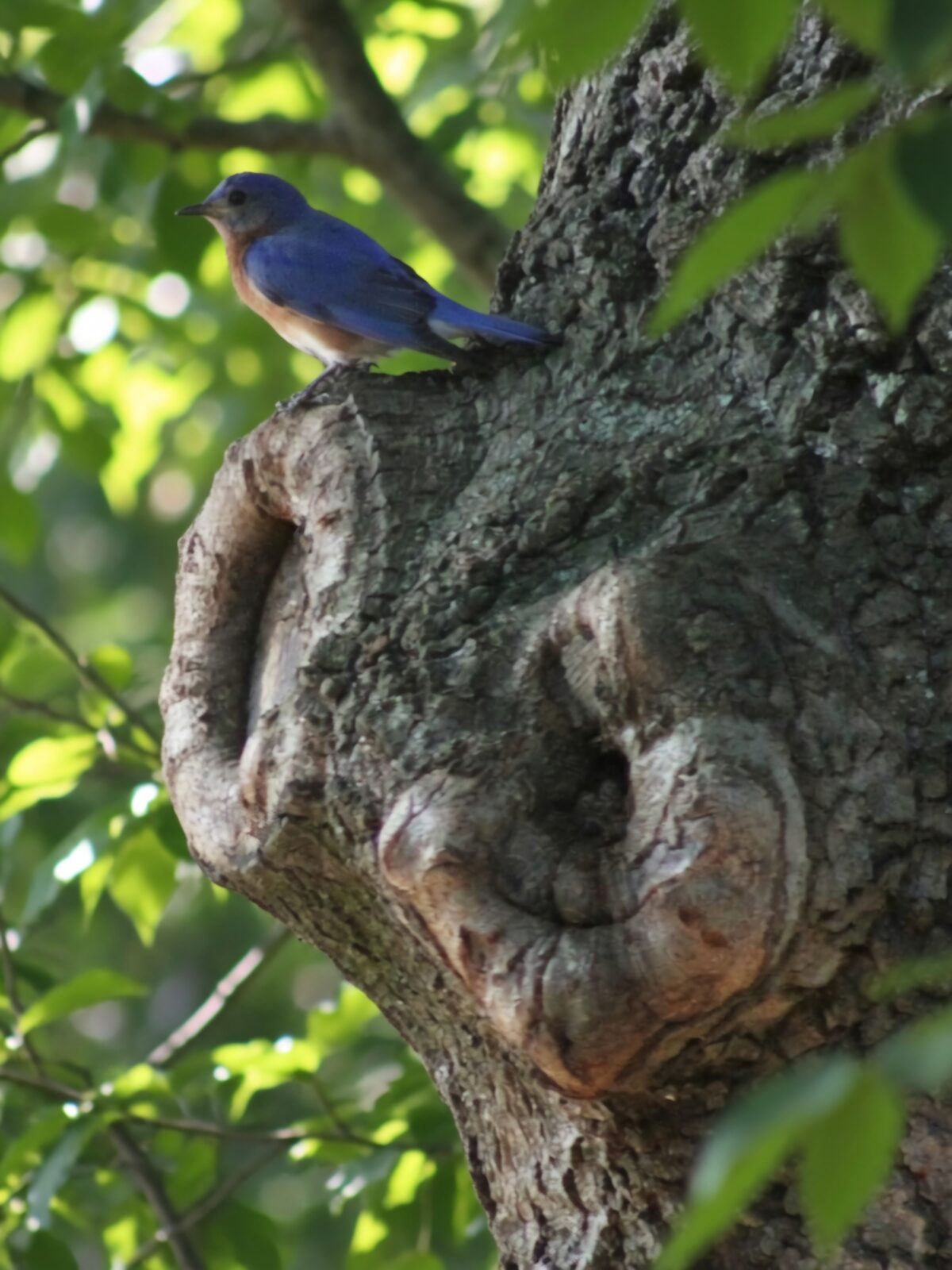
Look who’s back! So glad to see this beautiful bluebird gracing my tree again after being MIA for a few weeks. Always a joy to spot these vibrant little guys!
My trusty Bird Buddy feeder has been delivering some serious eye candy lately! From flashy visitors to sweet little regulars, here are my favorite shots from the past week in the backyard.
Which one is your favorite? Drop a comment below — I’m always curious what catches your eye!
If you’ve ever watched a pair of Eastern Bluebirds frantically hunting in your backyard, you know just how hard bird parents work. Back in April, I was lucky enough to witness the payoff: a pair of resident Eastern Bluebirds successfully raised their first brood, and I caught the rewarding sight of a brand-new fledgling on my fence.
But now that June is here, it raises a fascinating question: are they done for the summer? Not even close! Raising multiple broods in a single season is actually a core part of the Eastern Bluebird’s summer survival strategy. While two broods are standard across most of their range, it is incredibly common for these birds—especially here in the warmer southern regions—to successfully raise three distinct broods before autumn arrives. It takes roughly five to six weeks to go from egg-laying to fledging. Because this pair got such an early start in April, they are perfectly on track to wrap up round two right about now, with a potential third batch running through July and August. Managing a continuous assembly line of hungry chicks requires serious teamwork. While the female incubates the next clutch of eggs, the male takes over full-time dad duty, teaching the speckled teenagers from the first round how to hunt. So, if you notice a sudden spike in traffic at the mealworm feeder, or spot a bright blue dad feeding a scruffy, spotted juvenile while mom sneaks back to the nest, you’re witnessing the ultimate backyard tag-team effort. Keep your eyes on the skies—and the fence lines—for round two!
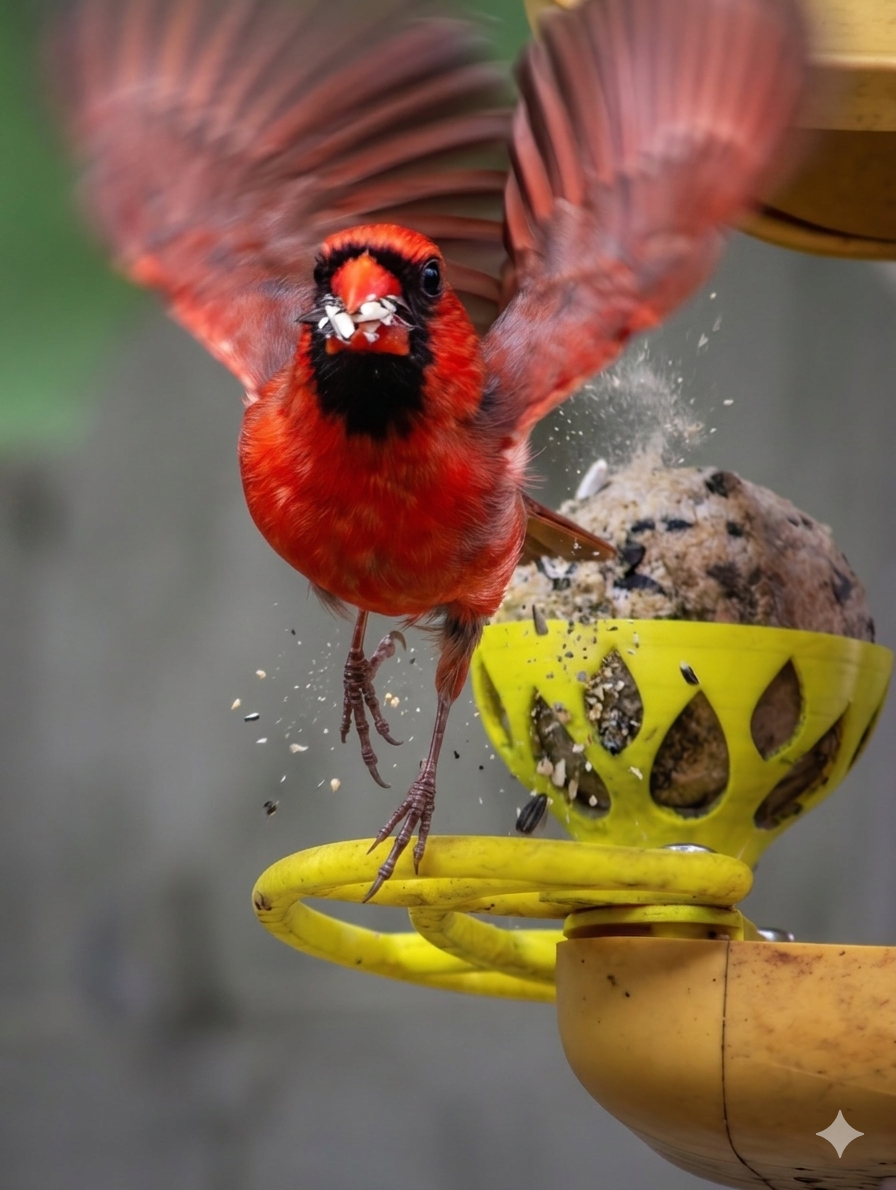
He is a stunning Northern Cardinal, a peaceful neighbor to the local wrens and chickadees, and hands-down the messiest eater in the neighborhood.
Caught him here, taking off from the Bird Buddy feeder with a beak absolutely packed to the brim. He doesn’t just eat the snacks; he launches them. But hey, the chickadees aren’t complaining about the free cleanup buffet he leaves behind!
Just look at the incredible detail on this Carolina Wren’s feathers! Nature’s artistry is truly amazing, from the delicate patterns to the subtle color variations. Such a charming visitor!