Why Nuthatches Sound Like Squeaky Toys
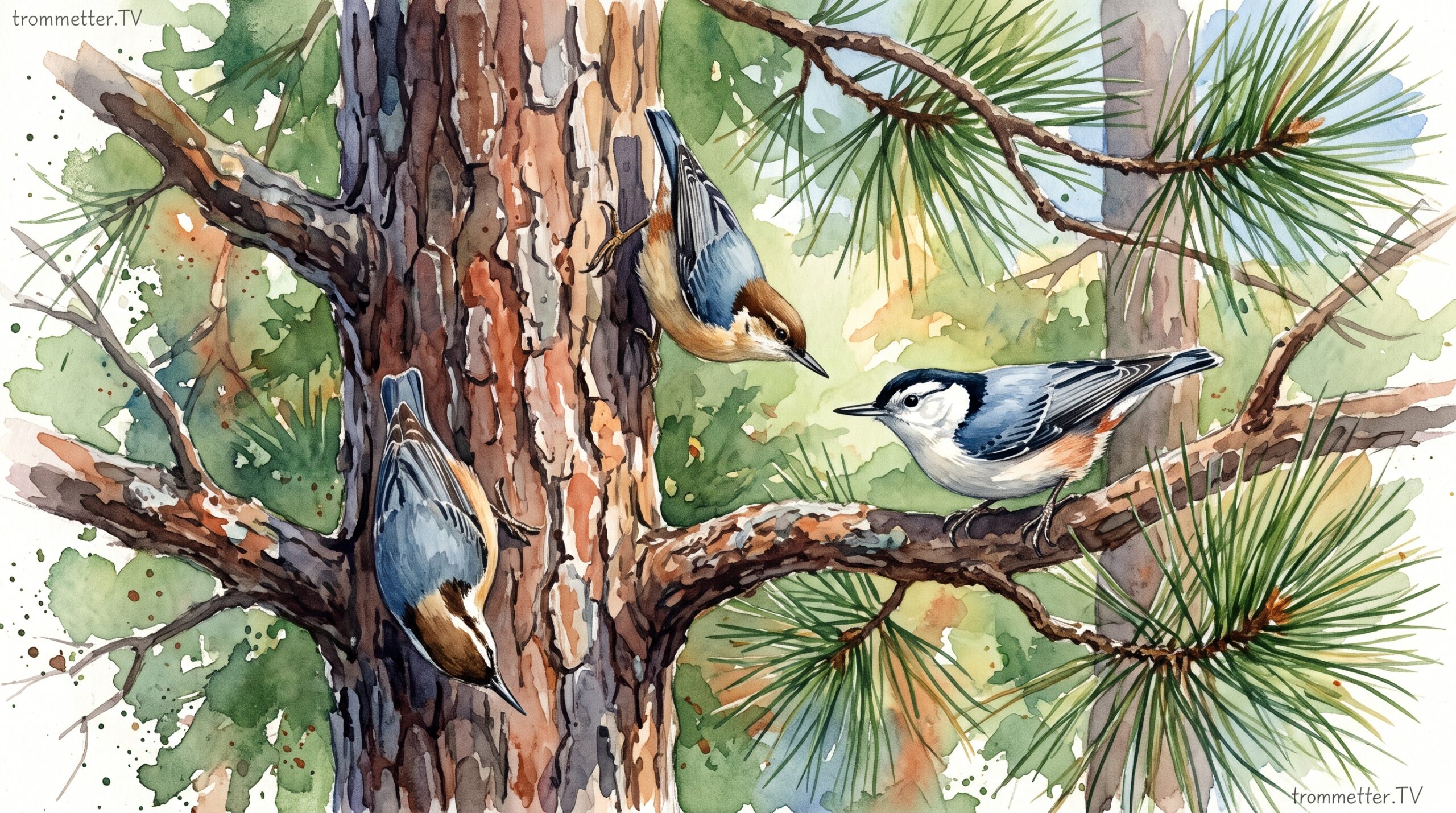
Acoustic Physics and Pine Canopy Radar
If you’ve ever walked under a pine stand in the Carolinas and heard what sounds like a toddler relentlessly squeezing a rubber duck from forty feet up, you’ve encountered a nuthatch.
Unlike the melodic, whistling flutes of thrushes or the rich carols of cardinals, nuthatches produce one of the most distinctive, mechanical sounds in North America: a nasal, blunt, squeaky-toy honk.
Here is the breakdown of why they sound this way—from syrinx mechanics to evolutionary survival—compiled as reference material for upcoming blog posts.
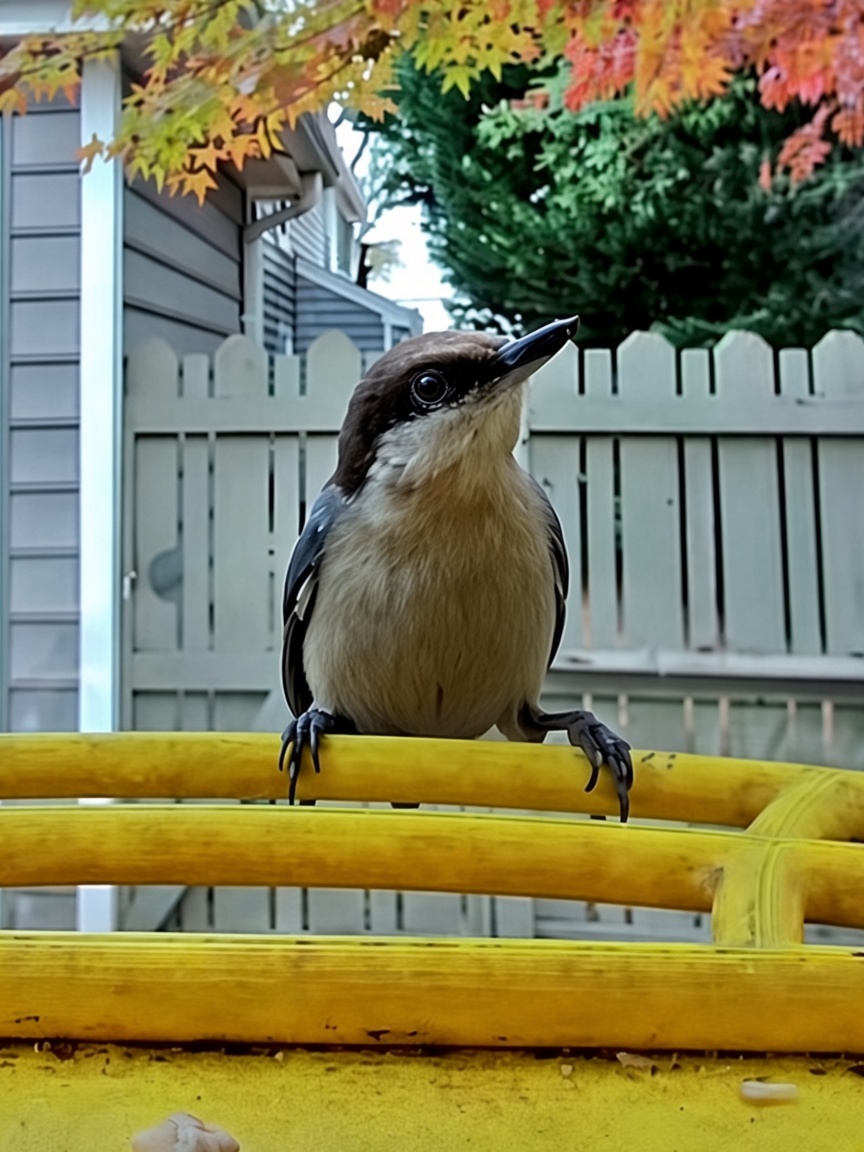
The Acoustic Signature: Flat Harmonics vs. Pure Whistles
Most classic songbirds produce pure-tone whistles (sine waves) by finely modulating air across their syrinx membranes. On a sound spectrogram, a cardinal or bluebird note looks like a clean, flowing brushstroke that gracefully sweeps up and down.
Nuthatches use a completely different acoustic mechanism:
- The Mechanical Reed Effect: Instead of a pure whistle, a nuthatch’s syrinx vibrates to generate a dense stack of tightly clustered, flat harmonic overtones. Acoustically, this mimics air being forced through a flexible plastic reed or a rubber toy’s squeak valve.
- Instantaneous Attack and Cutoff: The sound has virtually no acoustic ramp-up or decay. It snaps on at full volume and cuts off abruptly (squee-dee, squee-dee), producing that blunt, artificial cadence.
2. Vocal Anatomy: Short Tracts and Nasal Formant Filtering
The physical shape of a nuthatch’s throat and bill dictates its nasal timbre:
- Rigid, Fixed Resonator: Nuthatches possess relatively short, straight, chisel-like bills. Unlike mimics or finches that dynamically open, close, and flare their beaks to modulate sound, nuthatches vocalize through a relatively static vocal tract.
- Band-Pass Filtering: The short acoustic chamber acts as an acoustic filter, suppressing warm, low-frequency base tones and aggressively boosting resonant frequencies between 2.5 and 6 kHz. The result is an unmistakable tin-horn or kazoo-like quality.
Evolutionary Purpose: Why Evolve a Squeaker?
Bird vocalizations are tools honed by natural selection. Nuthatches sound mechanical because that specific acoustic profile solves critical challenges in their forest environment:
- Punching Through Pine Wind: Wind rushing through needle-heavy pine canopies (loblolly, longleaf, and shortleaf) creates a constant wall of low-frequency white noise. Smooth, mellow whistles get scattered and muffled by needles, but a sharp, nasal squeak slices straight through canopy turbulence like a sonic beacon.
- Social “Radar Pings” for Family Squads: Southeastern pine specialists like the Brown-headed Nuthatch are intensely social, foraging in cooperative family groups of 6 to 10 birds. Because they forage upside down on opposite sides of giant tree trunks, they rarely have line of sight to each other. The low-energy, two-syllable squeak functions like a submarine ping: “I’m on this trunk, who is on that one?”
- The Tree Trunk Sounding Board: Nuthatches call while pressed tightly against vertical tree trunks. Hard pine or oak bark reflects sound forward rather than absorbing it, turning the tree trunk into an acoustic megaphone that projects their calls across the neighborhood.
Next time you’re watching the feeders or listening to the treetops and hear that familiar rubber-duck chatter overhead, take a closer look at the pine bark. You’re not hearing a misplaced toy—you’re listening to a tightly coordinated squad of upside-down acrobats keeping tabs on each other through the wind.