Wait Your Turn!
When Huey tries to cut in line at the feeder, Louise has plenty to say about it. 😤🐦
Sisterly diplomacy is officially on pause until everyone respects the perch queue.
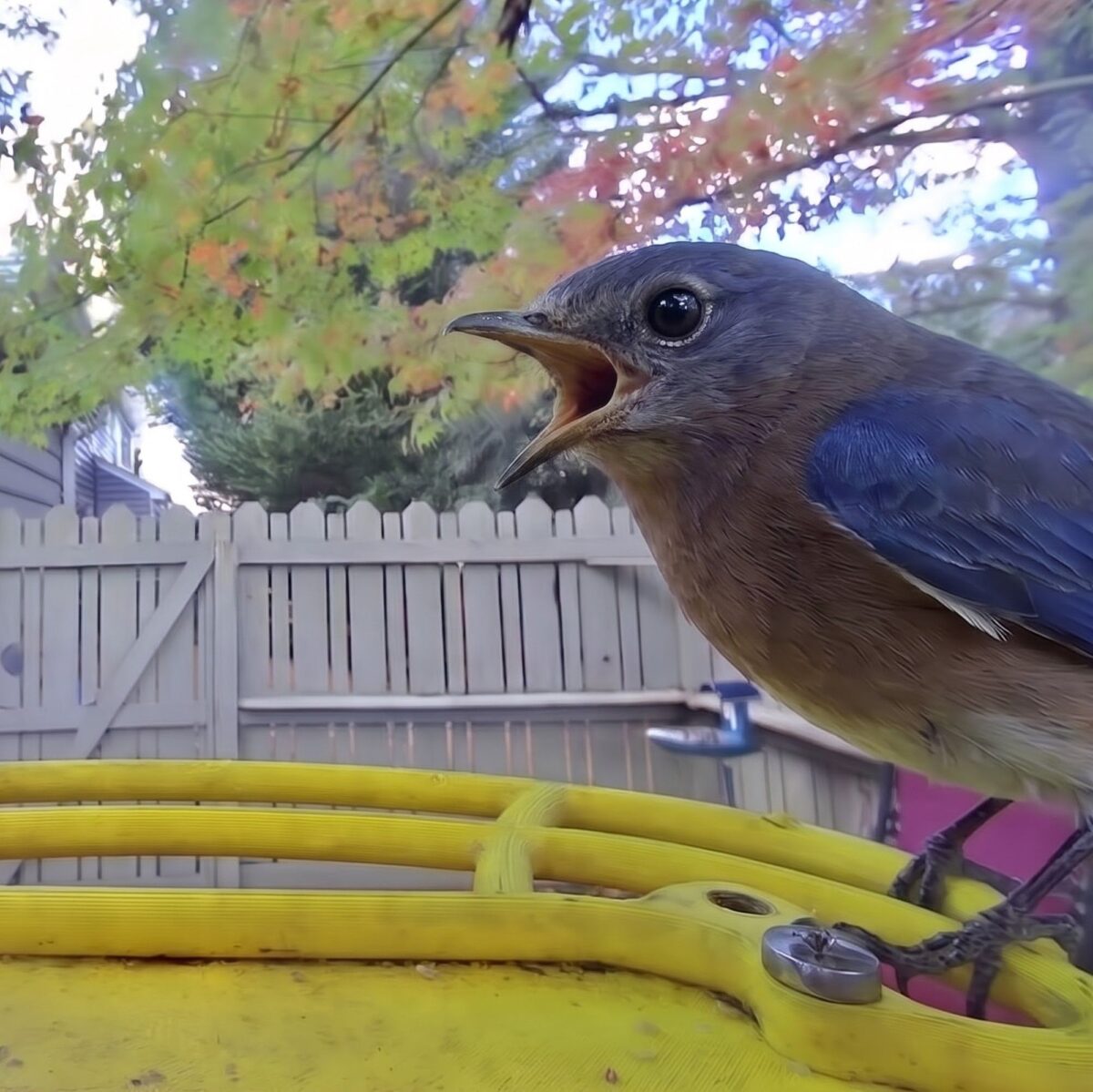
When Huey tries to cut in line at the feeder, Louise has plenty to say about it. 😤🐦
Sisterly diplomacy is officially on pause until everyone respects the perch queue.
Bruce sneaking in one last late-afternoon snack before the sun goes down—and clearly not wasting a single crumb! 🍒
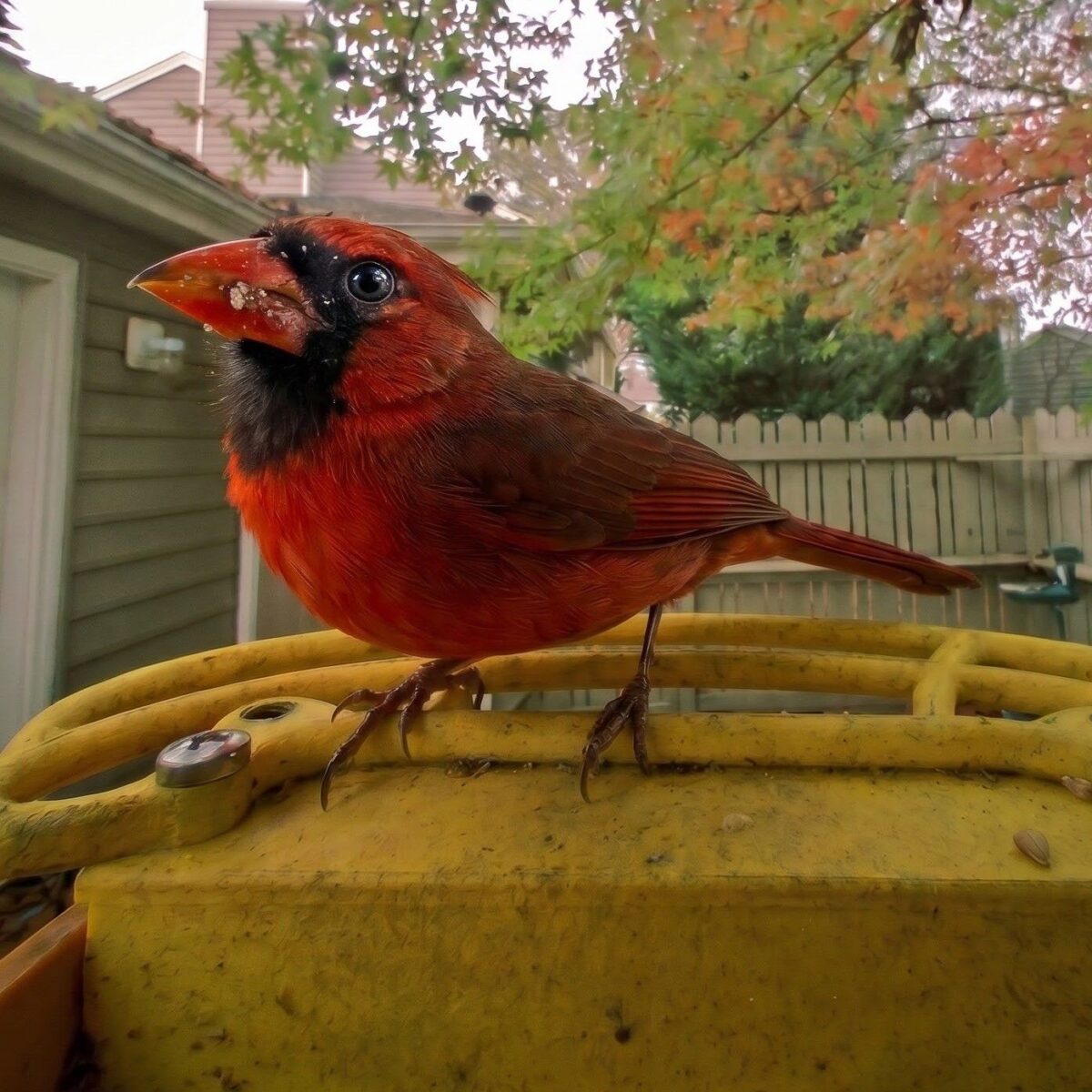
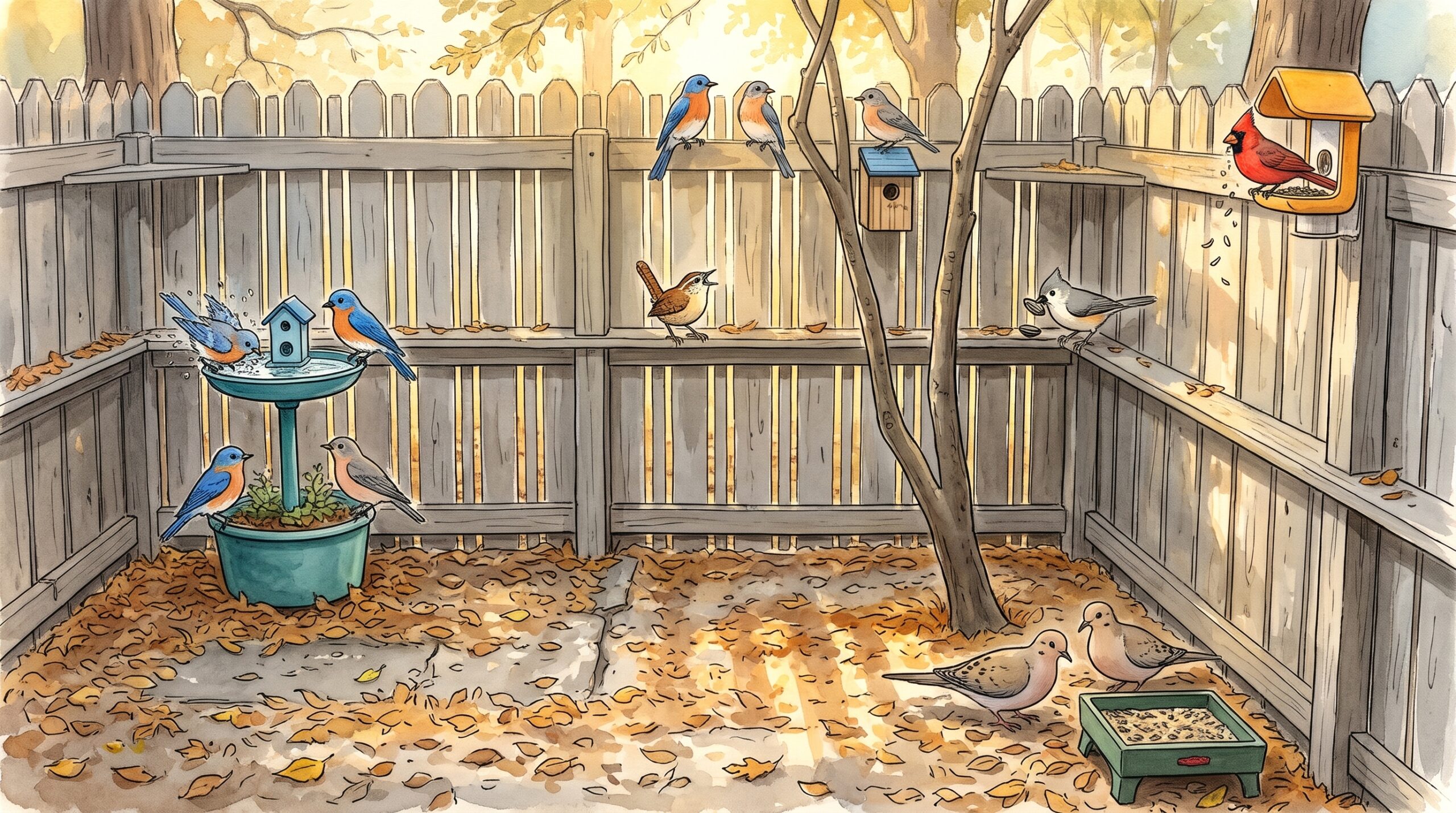
Meet the regulars who turn our backyard feeders, bird bath, and fence line into an ongoing wildlife sitcom. From Donald and Daisy and their bluebird triplets (Huey, Dewey, and Louise) to Freddie the 90-decibel Carolina Wren, Ringo the seed-drumming Tufted Titmouse, Bruce the messy Northern Cardinal, and Jake and Elwood the Mourning Dove ground crew, click here for the full roster and how everyone earned their name.

Every rock band needs an unforgettable frontman. In our backyard, that role belongs unequivocally to Freddie, our resident Carolina Wren.
If you’ve ever had a Carolina Wren perch on your deck railing and unleash its signature three-part song (tea-kettle, tea-kettle, tea-kettle!) right outside your window, you know it doesn’t sound like a bird. It sounds like an acoustic assault.
Naming him after Queen’s legendary frontman, Freddie Mercury, started as a nod to his cocked-tail swagger and theatrical presence. But when you look at acoustic science, the comparison isn’t just playful hyperbole—it’s surprisingly close to reality.

At peak belt, an unamplified, world-class operatic rock singer like Freddie Mercury can project sound between 95 and 105 decibels (dB) at a distance of one meter.
A Carolina Wren singing from the fence line clocks in between 80 and 90 dB, with peak territorial bursts pushing close to 95 dB.
Without a microphone or a massive stadium sound system, a human rock icon only edges out the wren by about 10 to 15 decibels. But here’s the kicker: scale.
Freddie Mercury weighed around 165 pounds (roughly 75,000 grams), backed by a massive diaphragm and lungs holding four to five liters of air. Freddie the Wren weighs just 0.7 ounces (20 grams)—about the weight of three quarters.
That means our human rockstar was roughly 3,750 times heavier than the bird. For a human to match a Carolina Wren’s acoustic output on a pure pound-for-pound basis, their unamplified voice would need to blast at well over 150 dB—loud enough to shatter glass and permanently deafen the front row.
And while a grueling rock tour demands vocal rest, hot honey tea, and recovery days between 90-minute sets, our backyard wren belts out an estimated 3,000 full-blast stadium solos every single day, seven days a week, without so much as a throat lozenge.
What makes Freddie’s decibel output even more comical is how he compares to the rest of the backyard crew.
Our neighborhood regulars represent a wide range of vocal styles:
In fact, the only common yard birds that rival a Carolina Wren in sheer ear-splitting volume are Blue Jays and American Crows—species that weigh anywhere from four to twenty times more than Freddie.
The secret to Freddie’s dominance isn’t just raw volume; it’s frequency tuning.
Low-frequency sounds like dove coos get swallowed up by grass and mulch, while high-frequency squeaks like chickadees fade quickly over distance. A Carolina Wren’s song sits squarely in the 3 to 5 kHz sweet spot—the exact acoustic window where human ears are biologically most sensitive, and the precise pitch that cuts cleanest through morning fog, autumn foliage, and double-pane window glass.
So while he doesn’t have Wembley Stadium or a yellow leather jacket in real life, Freddie doesn’t need them. He’s got the swagger, the pipes, and a permanent sold-out show right on the fence rail.
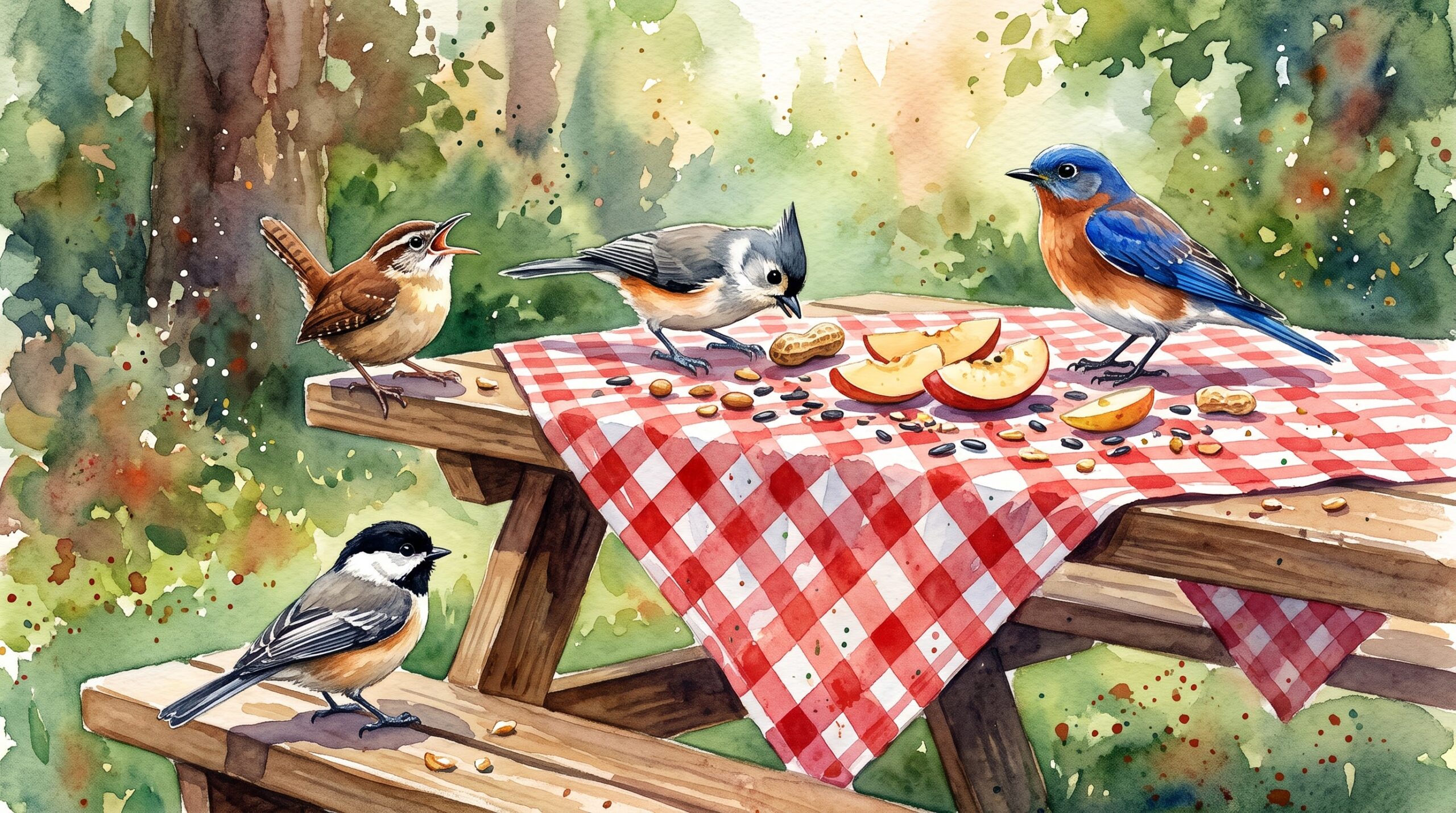
At lunchtime today, the backyard suddenly erupted into organized chaos, courtesy of a Carolina Wren acting as the neighborhood’s self-appointed dinner bell. Perched atop the weathered fence line, head thrown back and beak wide open, he delivered a ringing summons that no bird within earshot could ignore.
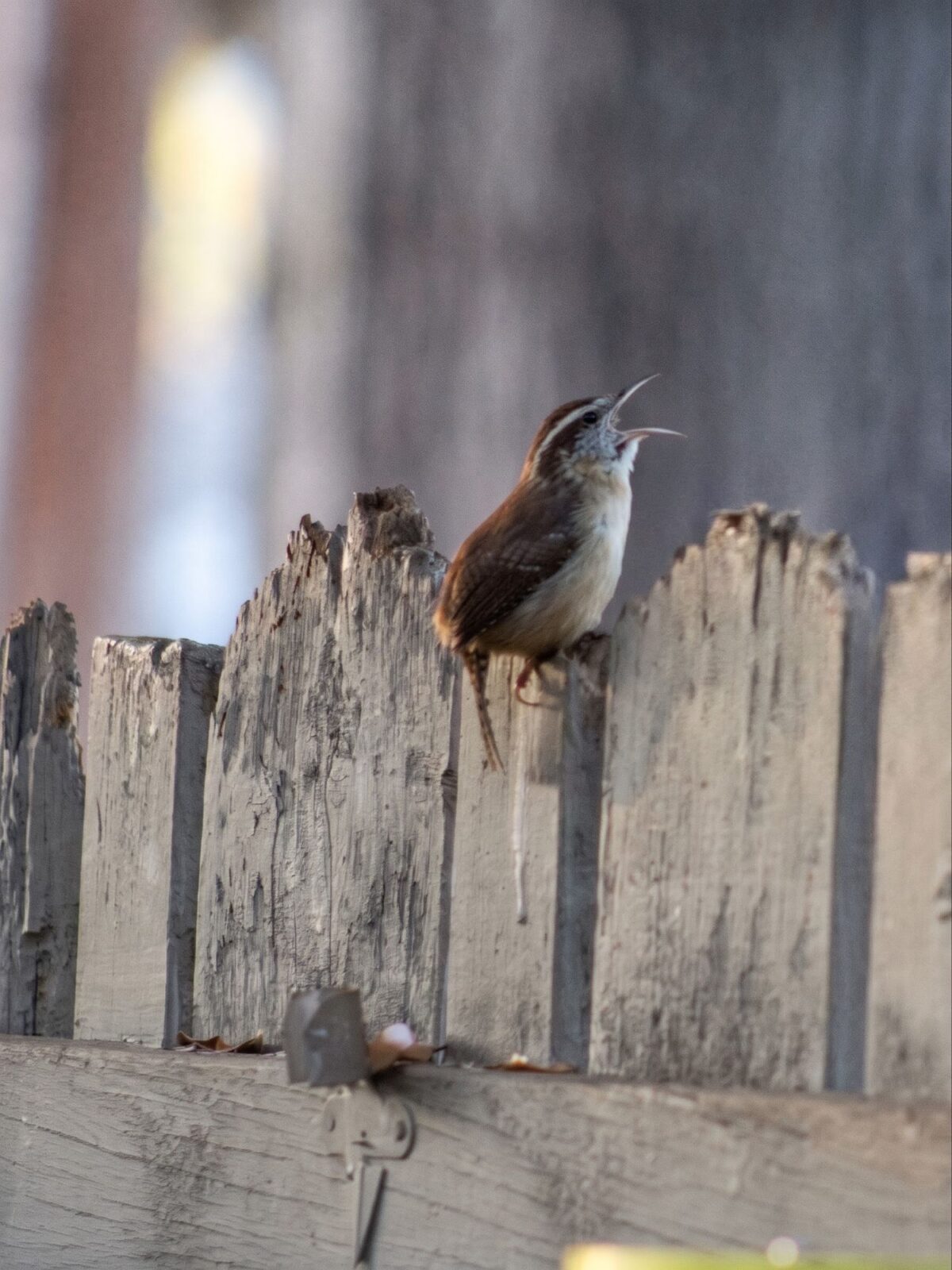
The response was immediate. Within minutes, a mixed foraging flurry descended on the feeder like a coordinated tactical unit. A Tufted Titmouse swooped in to pull off the ultimate midday score—snatching a whole peanut straight from the tray—while a Carolina Chickadee stood sentry on a weathered post, sharply eyeing the seed before dropping in for a bite. Even a brilliant Eastern Bluebird joined the midday circuit, pausing on the perch with regal calm amid the flurry of frantic wingbeats.
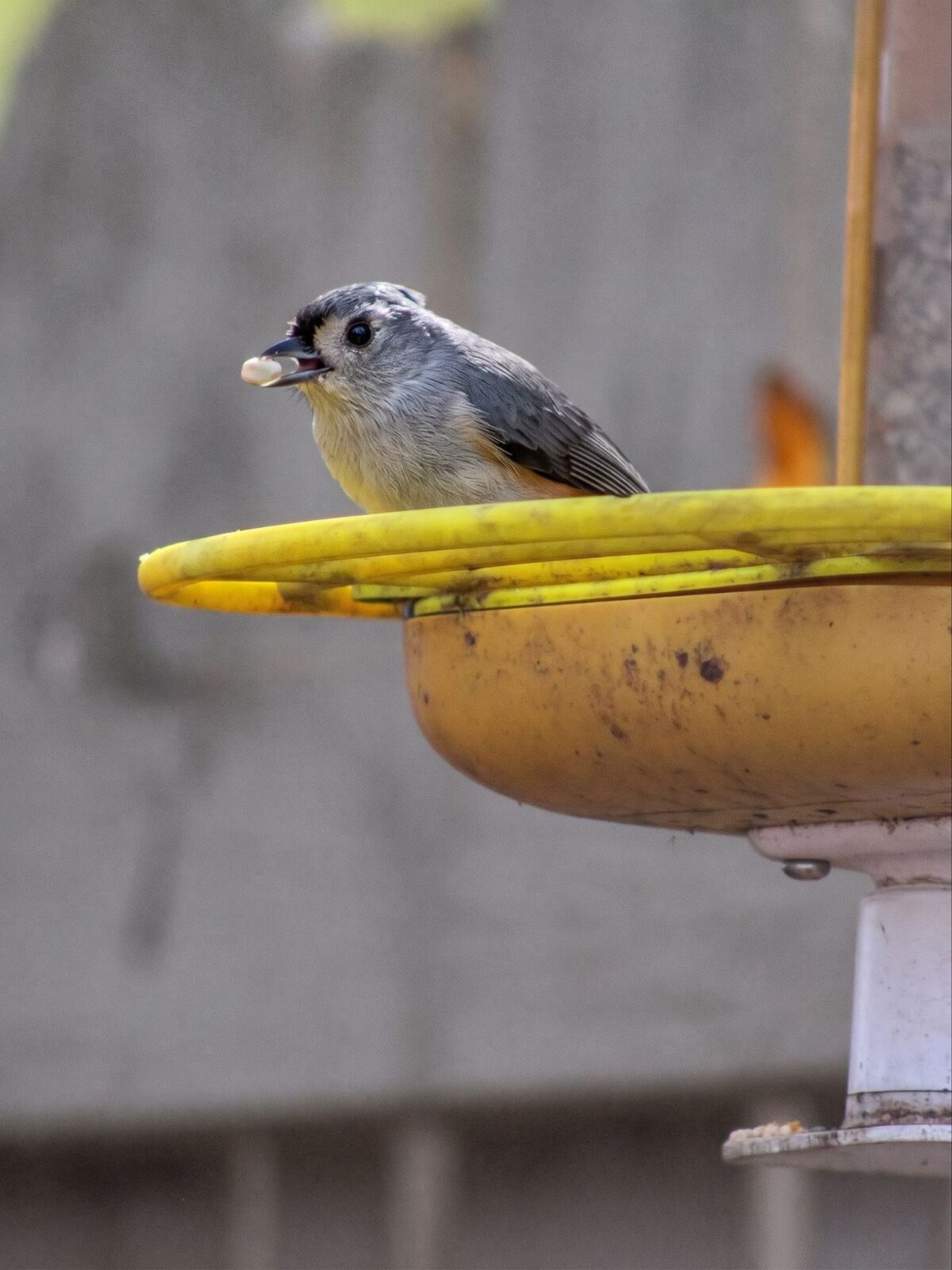
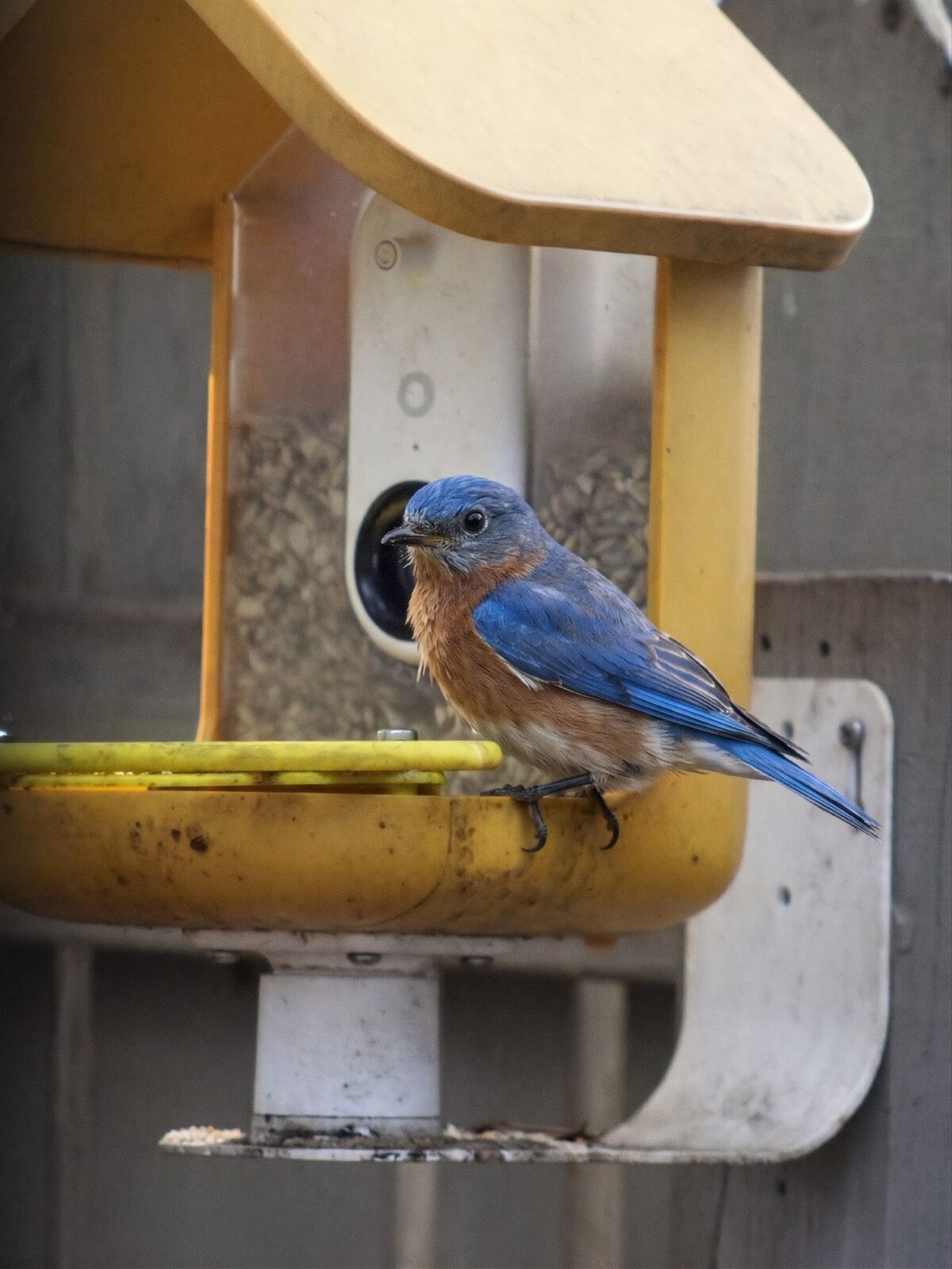
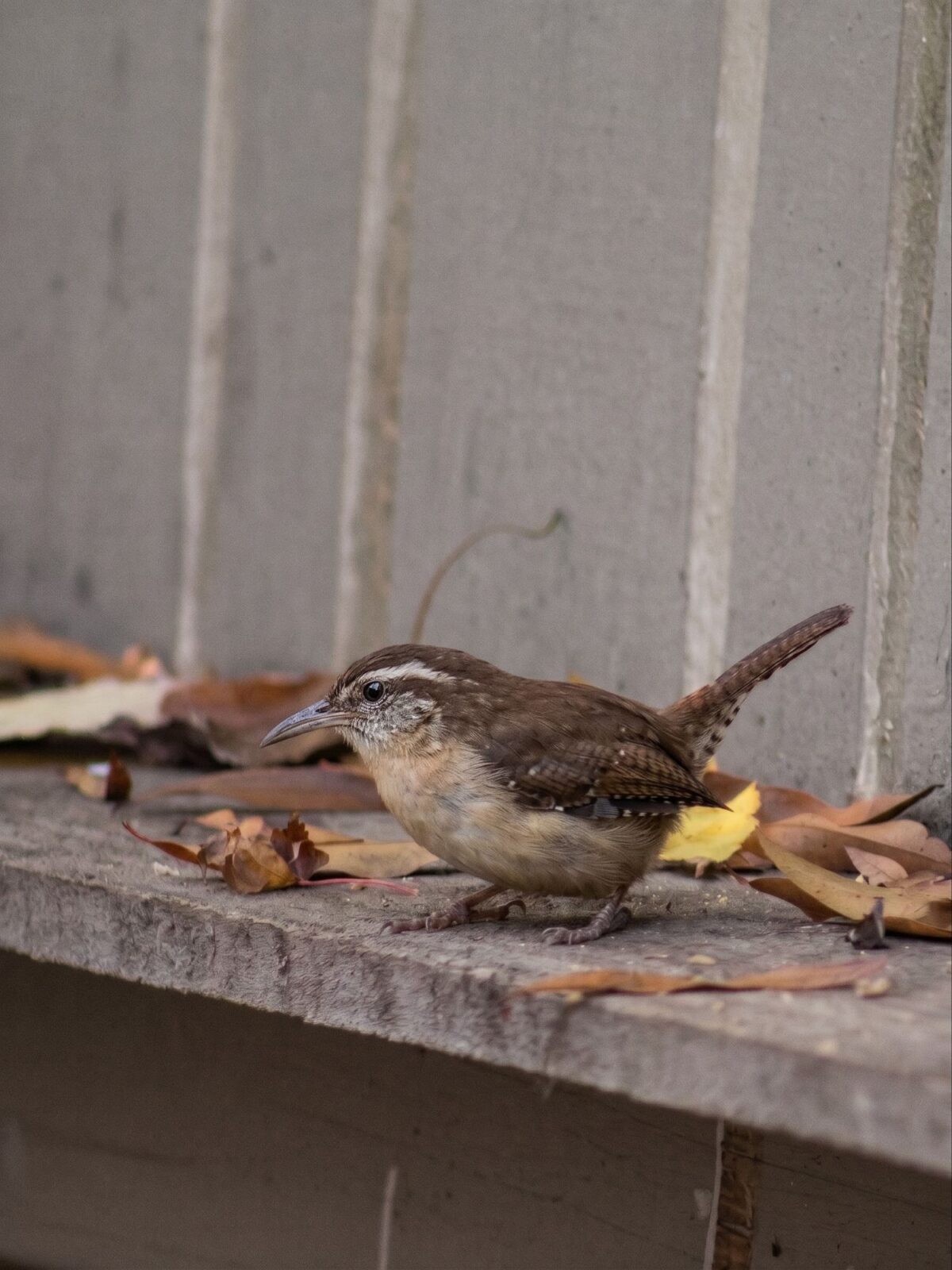
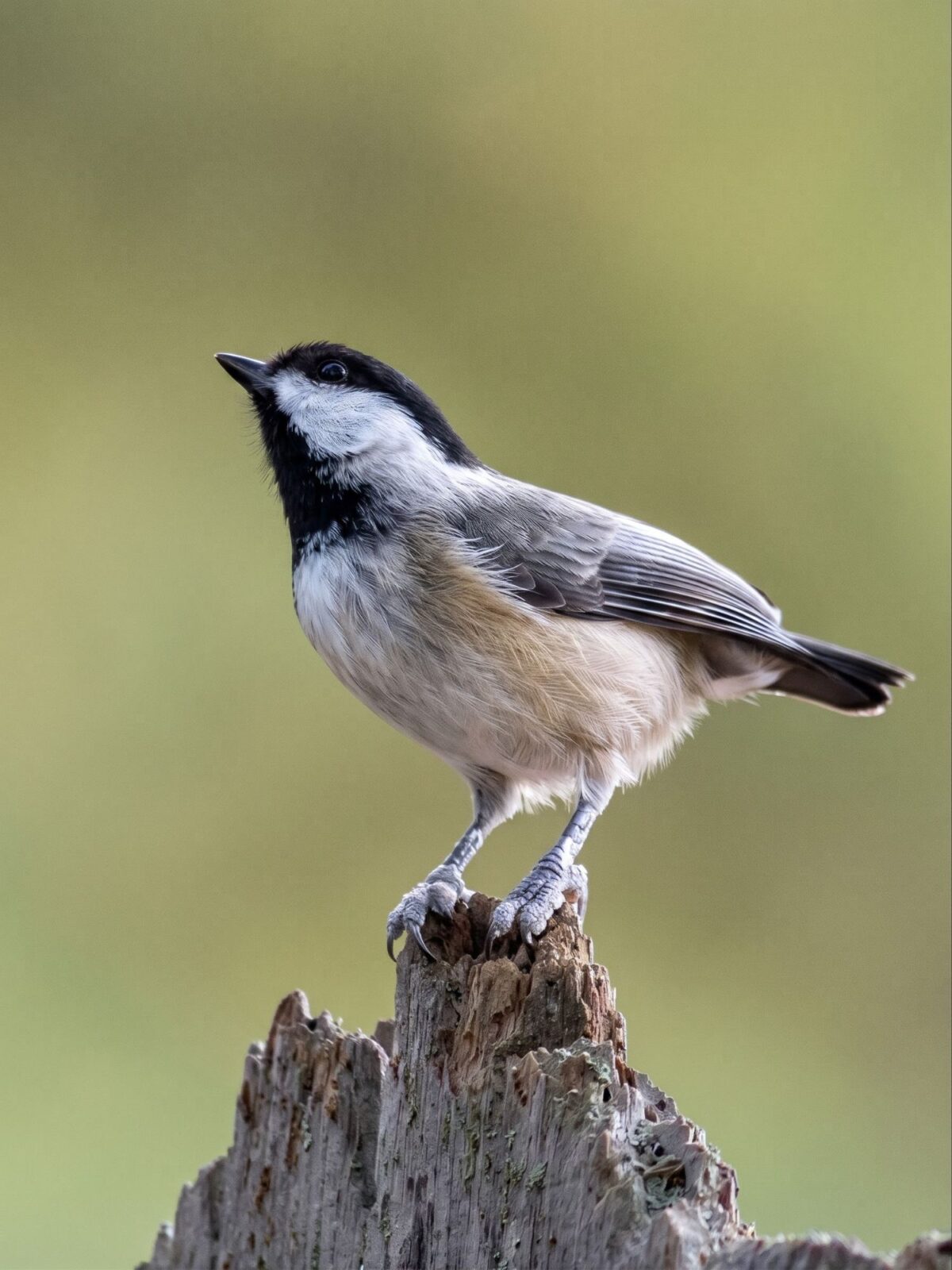
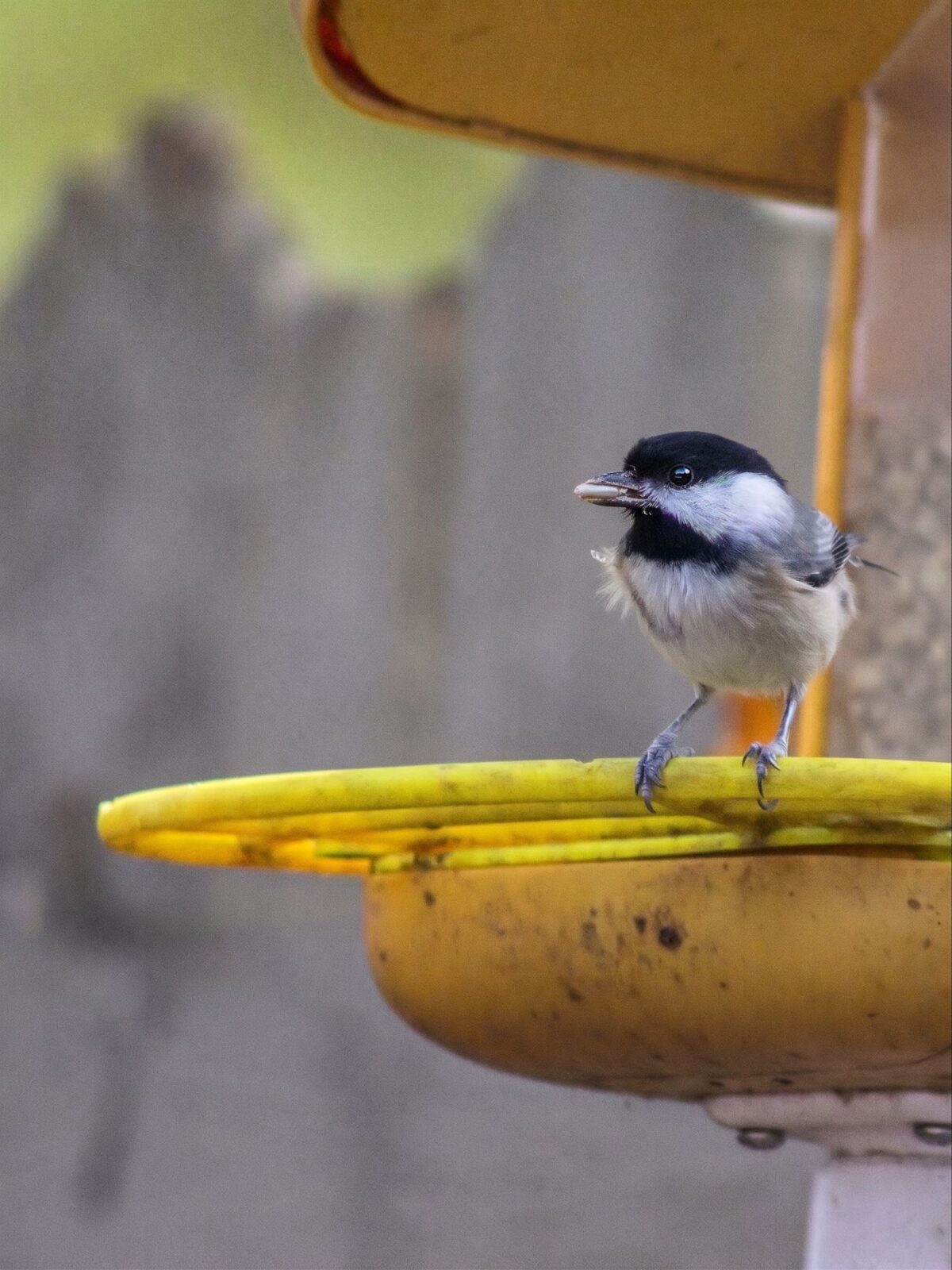
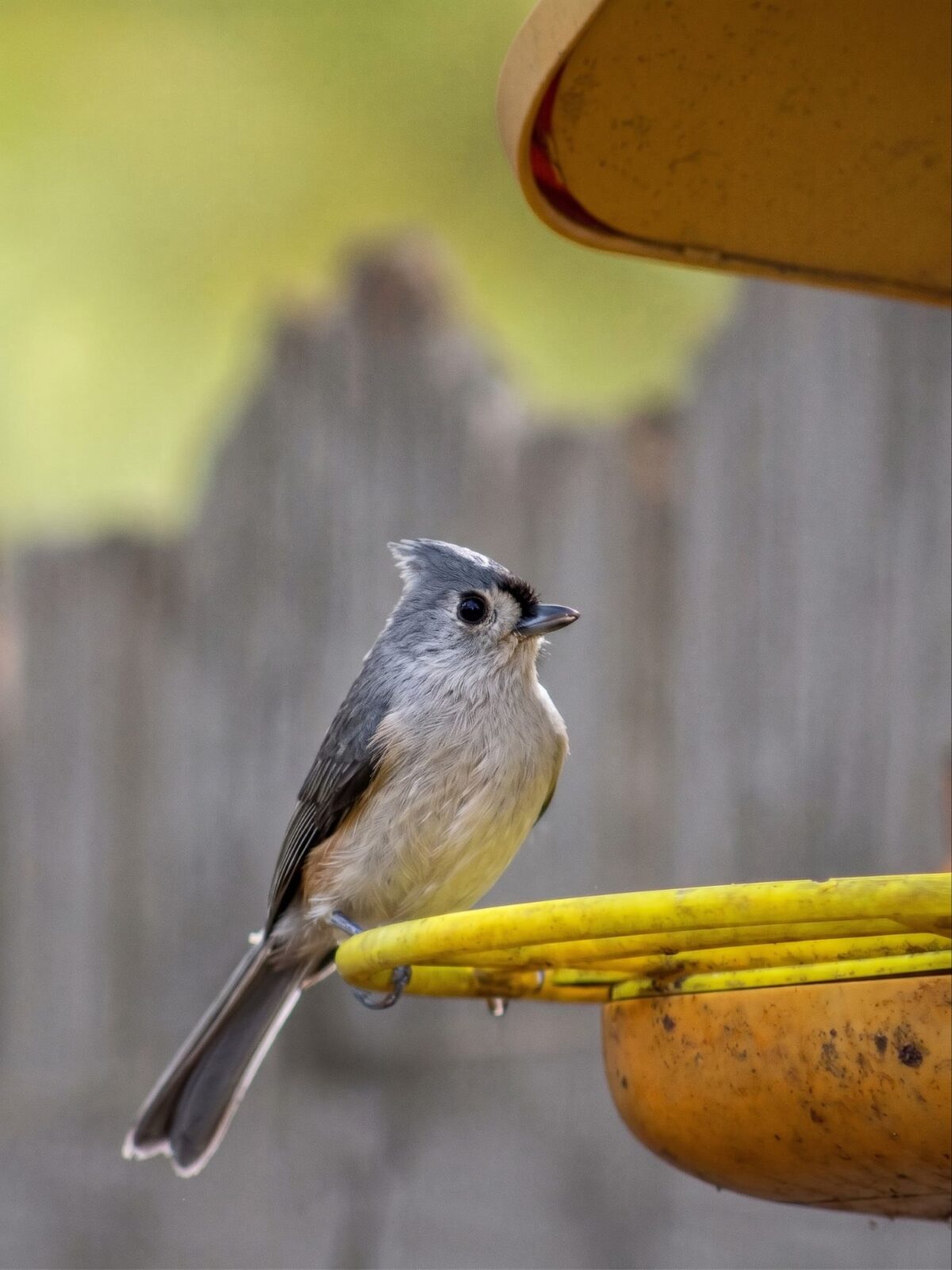
True to form for a winter mixed flock, it was a classic smash-and-grab. They didn’t clear out the feeder, but once the high-value treats were claimed and cached, the entire crew vanished just as abruptly as they had arrived—fifteen minutes of pure, bustling backyard magic, followed by sudden, peaceful quiet.

Back in October, a scruffy crew of “graduates” from The Summer Assembly Line took over our backyard. Those speckled, awkward teenagers spent weeks splashing in the bath and wearing a disorganized patchwork of baby down and emerging color.
Fast forward to early November, and the transformation is officially complete.
Our juvenile bluebird trio—now affectionately dubbed Huey, Dewey, and Louise—have wrapped up their first prebasic (formative) molt. The spotted chests and disheveled plumage are gone, replaced by dense, weather-ready winter coats.
Even better, their new feathers have finally settled the sibling roll call.
Louise stopped by the feeder tray first, showing off the classic understated elegance of a young female: soft slate-blue wings, a subtle eye-ring, and a gentle peachy-buff breast.
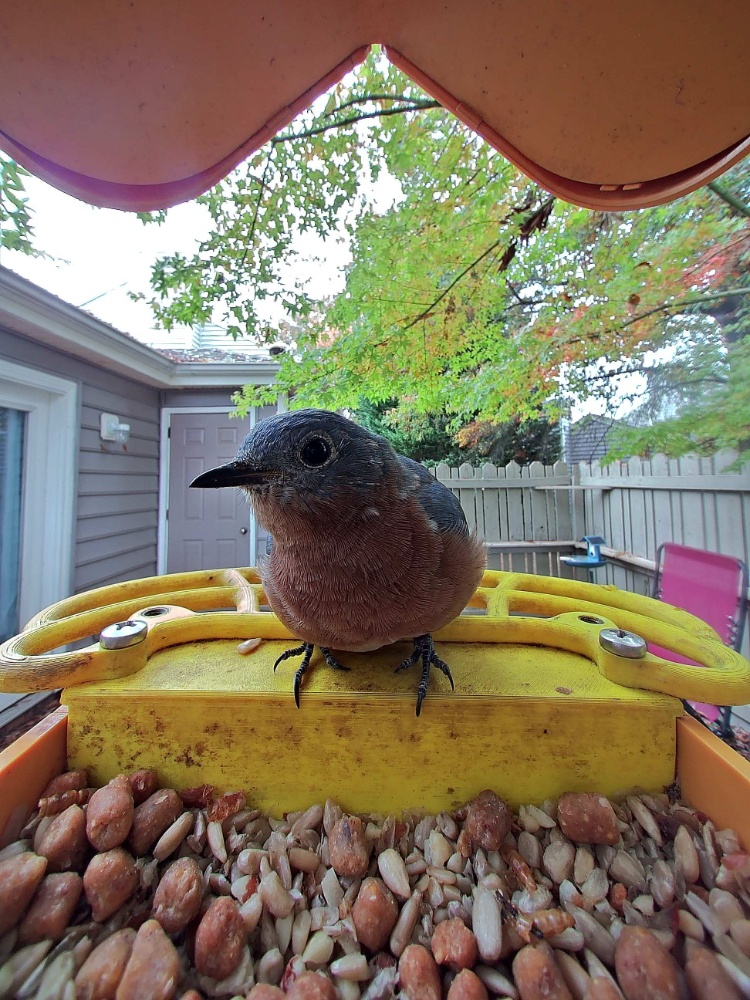
Not long after, one of her brothers (either Huey or Dewey) dropped in for lunch, sporting a vivid royal blue rump, a cobalt tail, and a rich brick-cinnamon chest that leaves no doubt he’s a young male.
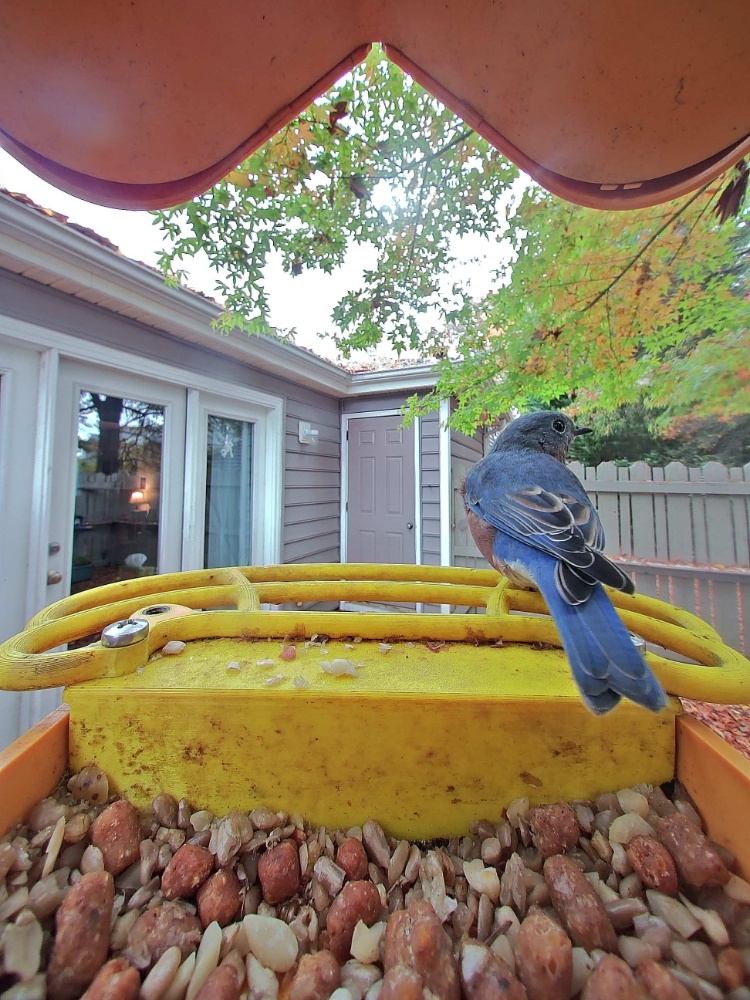
Seeing them fully feathered and fueled up on sunflower chips and suet is the ultimate payoff. The awkward teenage weeks are behind them, their winter insulation is locked in, and the assembly line’s Class of 2026 is officially ready for whatever cold snaps the Carolinas throw at them.